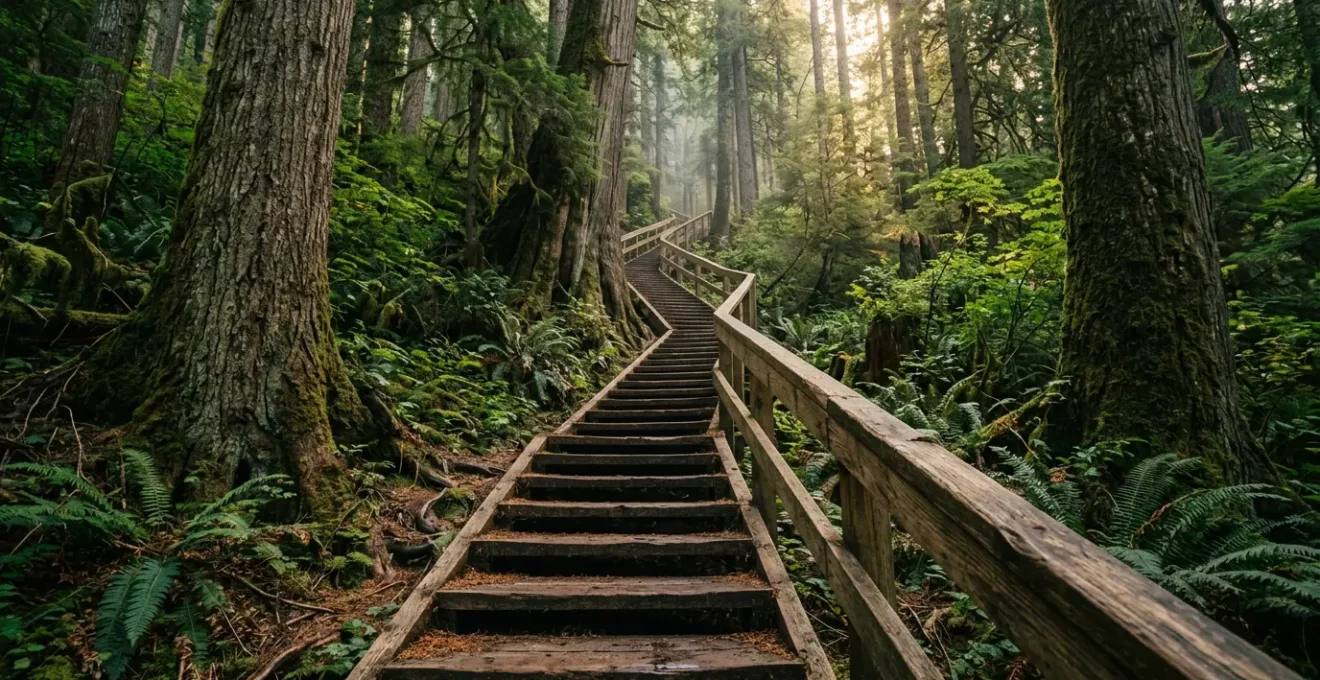
Conquering the Grouse Grind is less about raw fitness and more about athletic strategy, covering everything from your pacing cadence to your post-hike recovery plan.
- Treat the 2,830 stairs as a vertical HIIT workout, not a casual hike, focusing on consistent rhythm and core stability.
- Master the logistics—from catching the right bus to understanding the mandatory gondola download—to eliminate stress and conserve energy.
Recommendation: Your “hike” begins the moment you check the bus schedule; plan the entire day as a single, coordinated mission for a successful and rewarding experience.
So, you’ve set your sights on the Grouse Grind. You’ve heard the legends of “Mother Nature’s Stairmaster,” a relentless 2.5-kilometre trail that gains 800 meters of elevation. As a fitness trainer, I see many fit individuals approach the Grind with confidence, only to be humbled. Why? Because they treat it like a simple, albeit steep, hike. Generic advice like “bring water” and “pace yourself” is true, but it misses the point entirely. This isn’t a walk in the park; it’s a full-body athletic event that demands a specific strategy.
The secret to not just surviving, but conquering the Grind, is to reframe it. Think of it as a 90-minute, high-intensity interval training (HIIT) session on a natural stairclimber. Success depends on cadence management, core engagement, and, crucially, a flawless logistical plan. Your mission doesn’t start at the trailhead; it starts the moment you decide to go. It involves understanding the transit, the costs, the rewards at the top, and even your recovery plan for the next day.
This guide moves beyond the platitudes. It’s your strategic briefing for the entire operation. We will tackle the critical logistical and planning questions that every first-timer faces. By mastering these details, you free up your mental and physical energy to focus on what truly matters: putting one foot in front of the other until you reach that glorious, hard-earned summit.
This article breaks down the essential logistical intel every aspiring Grinder needs to know. From transportation and costs to making the most of your time at the summit, consider this your complete mission plan.
Summary: Your Grouse Grind Mission Plan
- The $20 Download: Why Do You Have to Pay to Take the Gondola Down?
- Grinder and Coola: When Are the Bears Awake and Visible?
- The Altitude Reservation: Does Eating at the Observatory Include the Gondola Ticket?
- The Mountaintop Pond: Do You Need to Bring Your Own Skates?
- The Wind Turbine Viewpod: Is the Glass Floor Scary?
- Squamish or Harrison Hot Springs: Which Day Trip Fits a Rainy Forecast?
- Bus 236: Where to Catch the Connection to Grouse from the SeaBus Terminal?
- Vancouver Lookout vs Cypress Mountain: Which View Is Worth the Drive?
The $20 Download: Why Do You Have to Pay to Take the Gondola Down?
Let’s address the first and most crucial piece of logistical intel for any first-timer: the descent. After you’ve pushed your body to its limit and conquered those 2,830 steps, you cannot hike back down. It’s a common point of confusion, but the rule is absolute and in place for critical safety and environmental reasons. Descending the steep, high-traffic trail significantly increases the risk of injury and accelerates soil erosion, which is why Metro Vancouver, the park operator, strictly prohibits it.
This brings us to the cost. The Grouse Grind trail itself is a public park and is completely free to hike up. However, the summit facilities, including the famous Skyride gondola, are operated by a private entity, Grouse Mountain Resorts. This public-private partnership means that to get down, you must purchase a “Download Ticket” for their service. According to Grouse Mountain’s official pricing, this costs approximately $20 per adult when bought online. Think of this not as an optional fee, but as the built-in cost of completing your mission. Planning for this non-negotiable expense is the first step in a successful Grind strategy, ensuring there are no surprises when you’re exhausted at the summit.
For those who catch the bug and plan to tackle the Grind regularly, investigating an Annual Pass is a smart move. It often includes unlimited gondola rides, making it a cost-effective option for dedicated local athletes who use the trail as their personal training ground.
Grinder and Coola: When Are the Bears Awake and Visible?
Reaching the summit is a reward in itself, but one of the most unique features of Grouse Mountain is the opportunity to see its resident grizzly bears, Grinder and Coola. These are not zoo animals; they are rescue bears living in a protected refuge. Their story is a powerful reminder of the wilderness that surrounds Vancouver. Both were orphaned as young cubs—Coola near Bella Coola after his mother was killed by a truck, and Grinder found dehydrated near Invermere. They were brought to Grouse Mountain’s Wildlife Refuge, a sanctuary designed to give them a safe, naturalistic home.
This refuge is an impressive, protected habitat. The bears roam a sprawling 5.5-acre enclosure, which means seeing them isn’t always guaranteed. To maximize your chances, a little strategy is required. Your best bet is to time your visit for cooler parts of the day, such as the morning or late afternoon, as the bears often nap during the midday heat. Before you even start your hike, check the live grizzly bear webcam on the Grouse Mountain website to see if they’re active.
For an even better experience, align your arrival at the top with one of the scheduled ranger talks. These sessions not only provide fascinating insights into the bears’ lives but are often timed with feedings, which greatly increases the likelihood of a sighting. Remember to manage your expectations; the habitat’s size prioritizes the bears’ welfare over constant visibility. If they’re not out, you can still visit the ‘Birds in Motion’ demonstration, another excellent wildlife experience available during the summer.
The Altitude Reservation: Does Eating at the Observatory Include the Gondola Ticket?
After a grueling ascent, refueling is a top priority. While you can grab a casual bite at the main chalet, some hikers wonder if a more refined dining experience, like at The Observatory, is a viable option. The key question is one of value and logistics: does a dinner reservation cover the cost of the gondola? The answer is a resounding yes, and it can completely change your approach to visiting the mountain.
The Observatory Restaurant has a fantastic policy that essentially bundles fine dining with mountain access. As their official website states:
A Mountain Admission ticket to Grouse Mountain is complimentary for each member of your dinner party on the day of your advance reservation and includes access to the Skyride or Gondola and mountaintop activities.
– The Observatory Restaurant, Official Observatory Restaurant website
This means if you’re planning a special occasion or want to show visitors the view without the intense physical exertion of the Grind, booking dinner at The Observatory provides a round-trip Skyride ticket. For the hiker, this presents a strategic choice: do you do the Grind and pay $20 for the download, or do you skip the hike and opt for a high-end dinner that includes your ride both ways? The following table breaks down the options.
| Experience Option | Approximate Cost (CAD) | What’s Included | Best For | Physical Effort |
|---|---|---|---|---|
| Observatory Dinner Package | $89+ per person (2-3 course menu) | Round-trip Skyride ticket, fine dining experience, mountaintop access from 4pm onward | Special occasions, romantic dates, showing visitors the view without hiking, older guests | None – ride gondola both ways |
| Hike Grind + Download + Casual Dining | $20 download + $15-25 casual meal = $35-45 | Free trail access, gondola down, casual dining at Altitudes Bistro or similar | Budget-conscious hikers, fitness enthusiasts, achieving personal goals | High – 2,830 steps, 800m elevation gain, 1.5-2.5 hours |
The Mountaintop Pond: Do You Need to Bring Your Own Skates?
While the Grouse Grind is a summer-centric activity, Grouse Mountain transforms into a winter wonderland, famously known as the “Peak of Christmas.” One of its most iconic winter features is the 8,000-square-foot outdoor skating pond. For those visiting in the colder months, a common question is whether you need to lug your own skates up the mountain. The answer is no; you can travel light.
Grouse Mountain offers convenient on-site skate rentals, making it easy to spontaneously add a magical skating session to your visit. According to the current season’s rental pricing, rates are typically around $10 for adults and less for children. This accessibility makes it a perfect activity for families, couples, or anyone looking to embrace a classic Canadian winter experience without the hassle of bringing their own equipment.
The experience itself is nothing short of breathtaking. Gliding across the ice surrounded by snow-dusted evergreens, with the twinkling lights of Vancouver far below, is an unforgettable moment that feels worlds away from the bustling city.
As you can see, the ambiance is a huge part of the appeal. It’s a serene and picturesque activity that provides a completely different perspective on the mountain compared to the raw, athletic challenge of the Grind. If your visit falls during the winter season, planning for a short skate is a fantastic way to round out your mountain-top adventure.
The Wind Turbine Viewpod: Is the Glass Floor Scary?
Perched at the very peak of the mountain is the “Eye of the Wind,” a fully operational wind turbine with a 360-degree viewing pod at the top. For many, the main draw—and main source of anxiety—is its small glass floor section. So, is it as scary as it sounds? The answer really depends on your comfort with heights, but the experience is designed to be accessible to everyone.
Here’s the breakdown for the nervous visitor:
- The glass floor is small and optional. You are not forced to walk on it. It’s a small panel in the center of the pod, and you can easily stay near the perimeter walls and enjoy the full view without ever stepping on the glass.
- The view is the main event. The 360-degree panoramic vista is the real star of the show. You will not miss out on the breathtaking scenery of the surrounding peaks and the Georgia Strait even if you avoid the glass floor entirely.
- It’s an engineering marvel. Beyond the view, the turbine is a symbol of Grouse Mountain’s commitment to sustainability, designed to help the resort achieve energy self-sufficiency. This aligns perfectly with Vancouver’s reputation as a green city.
It’s important to note that accessing the Eye of the Wind requires a separate ticket in addition to your Skyride or Grind Download fee. You’ll take an elevator up the turbine’s core to reach the pod. Before purchasing, weigh the cost against the free, spectacular views available from the main Peak Chalet deck. If you have a keen interest in engineering or want that unique, highest-possible vantage point, it’s worth the price. If you’re on a budget or have a significant fear of heights, the main lookout points will still give you a million-dollar view.
Squamish or Harrison Hot Springs: Which Day Trip Fits a Rainy Forecast?
As any Vancouverite knows, a rainy forecast is a constant possibility. If rain spoils your Grind plans, or if you’re looking for a recovery day trip after the big hike, where should you go? Two popular choices are Squamish and Harrison Hot Springs. From a trainer’s perspective, the choice depends on your goal: active sightseeing or deep recovery.
Squamish, the “Outdoor Recreation Capital of Canada,” is fantastic in light drizzle or mist, which often adds to the dramatic beauty of the Sea-to-Sky corridor. The drive itself is stunning, and key attractions like the Britannia Mine Museum are fully indoors. The Sea to Sky Gondola offers enclosed cabins, providing breathtaking views even on a cloudy day. It’s an active, exploratory day trip.
On the other hand, Harrison Hot Springs is the undisputed champion for a truly wet, cold, and miserable day. The entire point is to get warm and relax. The drive is a straightforward highway route, and the main attraction is the indoor mineral hot pools. For someone who has just conquered the Grouse Grind, there is no better form of recovery. Soaking in the therapeutic mineral waters is the perfect remedy for sore muscles, making it the ultimate post-Grind recovery mission.
The following table compares these options, including a great in-city alternative if you don’t want to drive far.
| Destination | Best Weather Conditions | Drive Time from Vancouver | Road Difficulty in Rain | Key Indoor Attractions | Post-Grind Recovery Rating |
|---|---|---|---|---|---|
| Squamish | Light drizzle, misty conditions | ~1 hour (60 km) | Moderate – Sea-to-Sky Highway scenic but can be intimidating in heavy rain/fog | Britannia Mine Museum (fully indoor), Sea to Sky Gondola (enclosed cabins) | Moderate – sightseeing focused |
| Harrison Hot Springs | Heavy downpour, cold wet days | ~1.5 hours (130 km) | Easy – straightforward Highway 1 route | Indoor mineral pool resort, spa facilities | Excellent – therapeutic hot springs perfect for sore muscles the day after the Grind |
| Bloedel Conservatory (Vancouver) | Any rain intensity | ~20 minutes (within city) | Easy – city driving only | Tropical indoor conservatory at Queen Elizabeth Park, 100+ exotic birds | Good – warm tropical escape without leaving Vancouver |
Bus 236: Where to Catch the Connection to Grouse from the SeaBus Terminal?
Your Grouse Grind mission begins with a successful journey to the trailhead. For many visitors and locals alike, this means using public transit, which is both efficient and scenic. The most common route involves taking the SeaBus from downtown Vancouver’s Waterfront Station to Lonsdale Quay in North Vancouver, then connecting to the bus. The key is knowing exactly where to find that connection.
Upon exiting the SeaBus terminal at Lonsdale Quay, you’ll walk directly into the main bus loop. It can seem chaotic, but the system is well-organized. Here is your step-by-step guide:
- Exit the SeaBus terminal building and walk straight ahead.
- The stop for the #236 bus to Grouse Mountain is located at Bay 8. This will be on your right-hand side as you walk through the loop. Always double-check the digital display signs at the bay to confirm.
- Use a Compass Card or a tap-to-pay credit/debit card for your fare. This allows for a seamless transfer; the SeaBus and the bus ride will count as a single fare as long as you tap on within the 90-minute transfer window.
- On sunny summer weekends, aim to arrive before 9 AM. The #236 is a popular route, and buses can fill up quickly. Arriving early prevents the stress of having to wait for the next one.
- For your return trip, use a transit app or the TransLink website to check the “Next Bus” schedule from the summit. This minimizes waiting time and helps you manage a crowded final bus of the day.
Mastering this transit connection is a small but significant victory. It removes a major point of stress, allowing you to arrive at the base of the mountain calm, focused, and ready for the physical challenge ahead.
Your Pre-Hike Logistics Checklist: Grouse Mountain
- Transit Plan: Confirm the SeaBus and #236 bus schedules for your planned start time. Have your Compass Card or tap-to-pay method ready.
- Gear & Fuel Check: Inventory your essentials: proper trail shoes, at least 1 litre of water, a high-energy snack, and a light layer for the summit.
- Gondola Ticket: Pre-purchase your $20 Download Ticket online to save time and ensure a smooth descent.
- Summit Activities: Check the operating hours for any summit activities you plan to enjoy (e.g., grizzly bear viewing times, ranger talks).
- Weather & Trail Status: Check the Metro Vancouver Parks website for any trail alerts or closures and review the specific mountain forecast.
Key Takeaways
- The Grouse Grind is an athletic challenge; approach it with a strategic mindset, not as a casual hike.
- Master the logistics: The mandatory $20 gondola download and the #236 bus from Lonsdale Quay are non-negotiable parts of the plan.
- Use the mountain’s features strategically, from timing your visit to see the grizzly bears to choosing a post-hike recovery day trip like Harrison Hot Springs.
Vancouver Lookout vs Cypress Mountain: Which View Is Worth the Drive?
After conquering the Grind, you are rewarded with the “Achiever’s View”—a spectacular north-to-south perspective of the city grid that you truly feel you’ve earned. But how does this view compare to other famous Vancouver viewpoints? Understanding the unique character of each helps you appreciate what makes the Grouse view so special and helps you recommend the right spot to the right person.
The Vancouver Lookout in Harbour Centre offers a 360-degree urban perspective from the heart of downtown. It’s perfect for understanding the city’s layout and architecture, and it’s easily accessible on foot. It’s the “Urban Explorer’s” choice.
The Cypress Mountain Lookout on the way to Cypress Provincial Park is a local favourite, especially for sunset. It’s a free, drive-up spot that offers a stunning west-facing view over the ocean, Bowen Island, and the Gulf Islands. This is the “Nature Lover’s” choice, offering a quintessential West Coast landscape perspective.
The view from Grouse Mountain is different. It’s a direct reward for immense physical effort. You see the city from a unique angle, looking down the grid, and that visual is forever tied to the memory of your accomplishment. It’s more than just a pretty picture; it’s a trophy. The table below helps clarify which view is right for which occasion.
| Viewpoint | User Intent Match | View Characteristics | Accessibility | Best Time | Photography Style | Approximate Cost |
|---|---|---|---|---|---|---|
| Vancouver Lookout | Urban Explorer | 360° city/harbour view, downtown context, architectural perspective | Walkable from Gastown/downtown hotels, no car needed | Daytime for cityscape clarity | Architectural shots, urban grid patterns | ~$18 admission |
| Cypress Mountain Lookout | Nature Lover | West-facing sunset view over ocean and Gulf Islands, natural landscape | Car required – ~30 min drive from downtown | Sunset (undisputed local favorite) | Sunset photography, natural landscapes | Free access to lookout |
| Grouse Mountain Summit | Achiever’s View | North-to-south perspective down city grid, earned through physical challenge | Public transit via 236 bus OR Skyride gondola | Clear weather days, post-hike reward | Achievement shots, unique city angle | Free if you hike up, $20 download OR $40-80 gondola round-trip |
Now that you have the complete strategic and logistical intel, the only thing left to do is execute the plan. Pick a clear day, prepare your gear, and get ready to earn your view from the Peak of Vancouver.