In summary:
- Thrifting on Main Street isn’t about luck; it’s about strategy. This is a 2-hour mission plan, not a casual stroll.
- Understand the “Retail Ecology”: Know the difference between for-profit thrift, charity shops, and curated vintage to manage your expectations on price and finds.
- Develop “Garment Intelligence”: Learn critical tests (Seam, Zipper, Label) to instantly tell authentic vintage from fast fashion fakes.
- Know the landscape: Main Street offers the best-concentrated mix of vintage and contemporary, beating out the more niche vibes of Gastown and South Granville for a high-yield hunt.
The rack is packed. A sea of mismatched fabrics, faded colours, and questionable patterns stretches before you. You’re on the hunt for that perfect 90s band tee or a one-of-a-kind denim jacket, but after 30 minutes of aimless digging, all you have is dusty fingers and a growing sense of defeat. This is the common reality of thrifting in a city as vibrant as Vancouver. Most guides give you a long, overwhelming list of stores, telling you to “be patient” and “have a good eye.” They treat it like a lottery.
But what if the key wasn’t patience, but a plan? What if you could treat a thrift trip not as a wander, but as a strategic mission? The secret of seasoned vintage pickers isn’t just a “good eye”—it’s an efficient system. It’s about knowing which stores to hit, in what order, and what to look for once you’re inside. It’s about understanding the retail ecology, from high-priced consignment that sells your old Zara to the difference between a true vintage gem and a well-disguised piece of fast fashion.
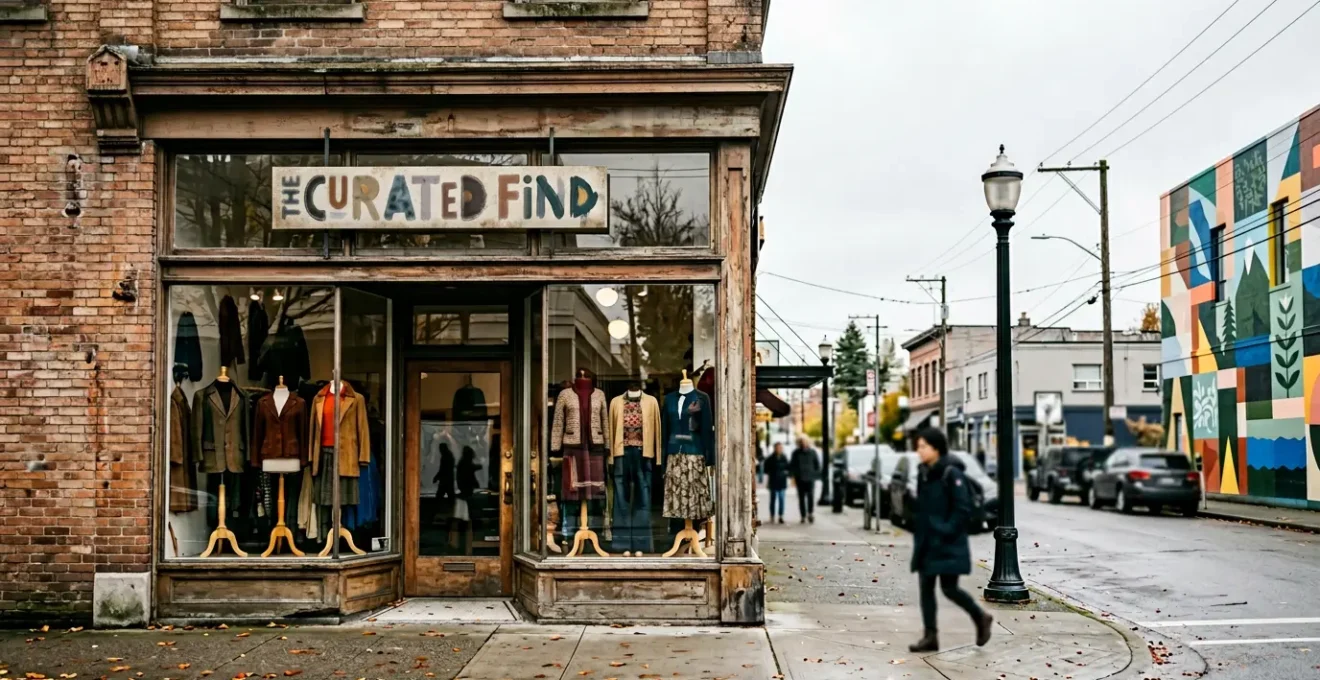
This guide is your 2-hour gauntlet for Main Street, the undisputed heart of Vancouver’s second-hand scene. We’re cutting through the noise to give you a tactical route and the “garment intelligence” needed to conquer the racks. We will dissect the business models that dictate price, teach you how to authenticate everything from a 1920s dress to a Prada bag, and show you how to read the city’s shopping districts to maximize your haul. Get ready to stop digging and start hunting.
Here is your tactical briefing for mastering Vancouver’s second-hand scene. This plan breaks down everything you need to know, from store economics to spotting fakes, ensuring your next thrift crawl is a success.
Summary: Your Tactical Guide to Vancouver Thrifting
- Consignment vs Thrift: Why Is “Value Village” Getting So Expensive?
- Where to Find Authentic 1920s Flapper Dresses for a Gatsby Party?
- Turnabout or Front & Company: Which Store Pays the Best for Your Used Zara?
- The “Mothball Smell”: How to Deodorize Your Thrifted Wool Coat Safely?
- The “Seam Test”: How to Spot Fast Fashion Disguised as Vintage?
- Pre-Loved Prada: How to Spot a Fake at Vancouver Consignment Stores?
- The Main Street Mural Walk: How to Find the Hidden Alleyway Art?
- Gastown vs South Granville: Which District Has Better Independent Boutiques?
Consignment vs Thrift: Why Is “Value Village” Getting So Expensive?
Before you even step onto Main Street, you need to understand the local retail ecology. Not all second-hand stores are created equal, and the price tag on a seemingly basic t-shirt is dictated by a specific business model. The sticker shock many feel at Value Village isn’t just inflation; it’s a reflection of its for-profit thrift model. These stores pay their non-profit partners a flat rate for donated goods by weight, then price items based on what they think the market will bear. There’s no charitable mission forcing prices to stay low, leading to the “ridiculous markups” shoppers often report.
This stands in stark contrast to non-profit charity shops, like the Salvation Army or the VGH Thrift Store. Here, the primary mission is to fund social programs. Prices are generally lower and more aligned with accessibility, making them a better bet for true bargain hunting, though the quality and curation can be more of a mixed bag. The third category, curated vintage and consignment, is what defines the Main Street experience. Stores like F as in Frank are run by pickers who selectively buy, trade, or consign items based on style, era, and quality. You’re paying a premium not just for the item, but for the owner’s expert eye that saved you hours of digging.
Understanding these three models is the first step in your mission plan. It allows you to set realistic expectations: hit the charity shops for volume and bargains, brace for market-driven prices at for-profits, and head to the curated boutiques on Main for specific, high-quality scores. The table below, based on Vancouver’s specific retail landscape, breaks it down.
This distinction is crucial for an efficient hunt, as highlighted in a recent CBC investigation into thrift store pricing.
| Store Type | Business Model | Pricing Strategy | Example (Vancouver) |
|---|---|---|---|
| For-Profit Thrift | Pays non-profits flat rate for donations, sells for profit | Market-driven pricing with reported inflation | Value Village (Victoria Drive) |
| Non-Profit Charity | Charitable mission, proceeds support programs | Lower prices to maintain accessibility | Salvation Army, VGH Thrift Store |
| Curated Vintage | Selective curation, consignment or buy-sell | Premium pricing for quality/uniqueness | F as in Frank (Main Street) |
Where to Find Authentic 1920s Flapper Dresses for a Gatsby Party?
Finding a specific, high-value period piece like a 1920s flapper dress is the ultimate test of a vintage hunter’s skill. It’s not something you’ll likely stumble upon at a Value Village. This kind of search requires targeting specialized, curated vintage stores and, more importantly, possessing the garment intelligence to distinguish a true antique from a modern costume. An authentic piece is an artifact, defined by its materials, construction, and the subtle signs of its age. Your hands and eyes are your best tools.
First, focus on the fabric. An authentic dress will be made of silk chiffon, beaded georgette, or silk charmeuse. These natural fibers degrade differently than modern polyesters; they might show faint colour shifts or a delicate fragility that synthetics lack. Next, examine the closures. Instead of a modern, plastic zipper running down the back, look for rows of intricate side-snap closures or hook-and-eye fastenings. Metal zippers were introduced in the late 1920s, but they will look and feel different from today’s YKK standard.
The beadwork is another major tell. True 1920s beading was done by hand with glass beads. Look for slight irregularities, the texture of aged thread, and a weight that hollow plastic beads can’t replicate. Finally, the silhouette itself is a key. Authentic flapper dresses have a dropped waistline that sits at the hip, creating a straight, boyish silhouette, not the curve-hugging fit of a modern “Gatsby” party dress. The hemline should be at or just below the knee, as the iconic super-short flapper look is more of a modern myth. Mastering these checks turns a hopeful search into a calculated authentication process.
Your Authentication Checklist: 1920s Garments
- Examine fabric construction: Authentic 1920s pieces use silk chiffon, beaded georgette, or silk charmeuse with natural fiber degradation patterns.
- Check closure methods: Look for side-snap closures, hook-and-eye fastenings, or metal zippers (introduced late 1920s) rather than modern plastic zippers.
- Inspect beadwork quality: Hand-sewn glass beads or sequins with thread showing age and slight irregularities, not uniform machine application.
- Verify garment proportions: Authentic flapper dresses feature dropped waistlines at hip level, straight silhouettes, and knee-length or shorter hems.
- Authenticate labels and tags: Period labels show hand-stitching, faded ink, and construction methods consistent with 1920s manufacturing.
Turnabout or Front & Company: Which Store Pays the Best for Your Used Zara?
Part of being a savvy thrifter is playing both sides of the field: buying and selling. Culling your own wardrobe to fund the next hunt is a key strategy. On Main Street, Turnabout and Front & Company are two of the biggest players in the contemporary consignment game. The question is, which one gives you the best return for your still-in-style, but no-longer-loved, pieces from brands like Zara or Aritzia? The answer lies in their slightly different models and payout structures.
Both Front & Company and Turnabout generally offer a 40% consignment rate, meaning you get 40% of the final selling price once the item is sold. Where they differ is in the upfront cash option. Turnabout offers a 25% cash buyout on the spot. This is a great option if you need immediate cash and don’t want to wait for your item to sell, but you’re sacrificing a significant chunk of potential earnings for that convenience. Front & Company’s model is more purely consignment-based for this tier of clothing.
The decision depends on your goal. If you’re confident your item will sell and you want the highest possible return, the 40% consignment rate at either store is your best bet. If you prefer a guaranteed, albeit smaller, payout right away, Turnabout’s cash option is the way to go. It’s also worth noting the curation. Both have a keen eye, but their specific tastes can vary. An item rejected at one might be accepted at the other, so don’t be discouraged by a single “no.” For higher-end luxury, stores like Mine & Yours Co. enter the picture with a completely different payout structure, but for contemporary brands, these two are your primary Main Street targets.
The sorting process at these stores is a lesson in garment intelligence itself. The buyer will examine fabric quality, check for wear, and assess current trend relevance in a matter of seconds.
As you can see, the focus is on tangible quality. This process is your free lesson in what sells. The payout comparison below is detailed in this breakdown of Vancouver’s consignment scene.
| Store | Consignment Rate | Cash Buyout Option | Accepted Brands | Process |
|---|---|---|---|---|
| Front & Company | 40% of sale price | Not specified | Mix of contemporary brands, selective curation | Walk-in sorting (approx. 20 minutes), unsold items returned after 60 days or donated |
| Turnabout | 40% of sale price | 25% cash upfront | Contemporary to luxury (Aritzia, Lululemon to designer) | Walk-in or appointment, same-day sorting (approx. 20 minutes) |
| Mine & Yours Co. | Varies (higher-end) | Available | Luxury only (Chanel, Hermès, Gucci, etc.) | Wed/Fri/Sat only, no appointment needed |
The “Mothball Smell”: How to Deodorize Your Thrifted Wool Coat Safely?
You’ve scored the perfect vintage wool coat. The fit is immaculate, the quality is undeniable, but it comes with an unwelcome accessory: that distinct, musty “mothball smell.” This odour, a combination of naphthalene (the chemical in mothballs) and years of storage, can be incredibly persistent. Dousing it in fabric spray will only mask it, and a trip to the dry cleaner can be expensive and may not even work. The good news is that a seasoned picker has several safe, effective, and cheap methods to neutralize the smell without damaging the delicate wool fibers.
First, do not wash it in a machine. The agitation and heat will felt the wool, shrinking and ruining your new treasure. Your best first weapon is fresh air and UV light. Hang the coat outside on a dry, breezy day for as long as possible (24-48 hours is ideal). The airflow helps dissipate the odour molecules, and the sun’s UV rays have natural sanitizing properties. Make sure to hang it inside-out for part of the time to expose the lining.
If the smell persists, it’s time for a more active approach. One of the best is the vinegar steam method. Hang the coat in your bathroom, turn the shower on as hot as it will go, and let the room fill with steam. Add a cup or two of white vinegar to the hot water stream (or a bowl on the floor). The steam opens up the wool fibers, and the acetic acid in the vinegar neutralizes the alkaline odour molecules. Let it hang in the steamy room for about an hour, then air it out again. A final, powerful option is to place the coat in a large, sealed plastic bag with an open box of baking soda or a container of activated charcoal for a few days. These substances are excellent at absorbing stubborn, trapped odours.
The “Seam Test”: How to Spot Fast Fashion Disguised as Vintage?
The racks of thrift stores are increasingly flooded with cheap, disposable fast fashion from brands like Shein and H&M. These items often mimic vintage styles but lack the quality and longevity that make a second-hand piece a true score. Developing the skill to quickly differentiate authentic vintage from its modern impostor is crucial for an efficient hunt. Your best tool is a series of quick, tactile checks, starting with the “Seam Test.”
Flip a garment inside out and look at the seam allowance—the fabric between the seam and the raw edge. Vintage garments typically have a generous seam allowance, often half an inch or even wider. This was done to allow for alterations. Fast fashion, on the other hand, is built on speed and cost-cutting, so its seam allowances are often a quarter-inch or less. Furthermore, check how the seam is finished. Look for high-quality finishing like French seams (where the raw edge is enclosed) or neat, dense serging. Messy, loose, or unraveling serging is a huge red flag for poor construction.
Once you’ve checked the seams, apply these other rapid-fire tests to build a complete picture of the item’s origin and quality:
- The Button Test: Real vintage buttons feel substantial. They’re often made of horn, wood, mother-of-pearl, or thick, solid plastic with metal shanks. Fast fashion uses cheap, lightweight, hollow-feeling plastic buttons.
- The Zipper Test: Look for metal zippers from reputable historical manufacturers like Talon, YKK, or Scovill. The quality of the zipper, its teeth, and how it’s sewn in are indicators of a well-made garment.
- The Label Test: The tag is a treasure map. Study its typography, material (older tags are often woven), and fiber content. A “Made in Canada” or “Made in USA” tag on a 90s-style piece is a good sign, whereas modern outsourced production locations point to fast fashion.
- The Lining Test: Quality vintage pieces, especially coats and blazers, often have a full lining made of a decent fabric like rayon or silk. Fast fashion will often skip lining entirely or use a cheap, flimsy synthetic material for a partial lining.
Pre-Loved Prada: How to Spot a Fake at Vancouver Consignment Stores?
The hunt for vintage can sometimes lead you to luxury. Finding a designer piece like a Prada handbag at a consignment store is the ultimate score, but it also carries the highest risk. The market for counterfeit luxury goods is sophisticated, and fakes are getting harder to spot. While Vancouver’s top-tier consignment stores are vigilant, the final responsibility rests on you, the buyer. Knowing the key markers of authenticity for a brand like Prada is non-negotiable garment intelligence.
Start with the hardware. Authentic Prada hardware has a substantial weight and a high-quality finish. It should be engraved with “PRADA” in the brand’s signature font, with the ‘R’ having a distinct, slightly curved leg. Zippers are a huge tell; Prada almost exclusively uses zippers from high-end manufacturers like Lampo, Riri, or IPI. Check the back of the zipper for one of these brand stamps. The iconic triangular plaque on the front should be securely attached, not glued, with perfectly even stitching around it. The enamel should be smooth and the text perfectly spaced.
Pay close attention to the lining and interior plaques. The signature Prada logo jacquard lining should be crisp, and the word “PRADA” should be woven throughout, appearing upside down on every other line. The interior logo plaque should match the exterior material (e.g., a leather plaque for a leather bag) and state “Prada MILANO” or “Prada MADE IN ITALY” in clear, evenly spaced capital letters. Any smudging, unevenness, or deviation in this text is a major warning sign.
This is a high-stakes game, and many Vancouver stores are now turning to technology for backup. They understand that the human eye can be fooled.
The level of detail required for authentication is microscopic, which is why top-tier shops have adopted advanced methods to protect their customers and their reputation.
Case Study: Vancouver’s Anti-Counterfeit Protocols
Vancouver’s established luxury consignment stores like Turnabout, Modaselle, and Mine & Yours Co. employ rigorous authentication protocols. Turnabout, for instance, maintains a zero-tolerance policy for counterfeits, implementing a $100 fine for any inauthentic items submitted. To bolster their in-house expertise, several of these stores have adopted Entrupy technology. This system uses an AI-powered device to take microscopic images of a bag’s materials, stitching, and hardware, comparing them against millions of records from authentic items. The service boasts a reported 99.86% accuracy rate and provides a Certificate of Authenticity, giving buyers a financial guarantee and peace of mind that their pre-loved Prada is the real deal.
The Main Street Mural Walk: How to Find the Hidden Alleyway Art?
Your two-hour thrift crawl on Main Street isn’t just about the stores; it’s about soaking in the neighbourhood’s creative soul. Main Street is the backbone of the Vancouver Mural Festival, and its walls and alleyways are a living gallery of world-class street art. But the best pieces aren’t always in plain sight. Finding the hidden gems is a treasure hunt in itself, a perfect intermission between store raids that costs you nothing but a little curiosity.
The key is to look in the alleys. Most tourists and shoppers stick to the main drag, but the real magic happens in the laneways that run parallel to Main Street. A good strategy is to thrift a block or two, then cut into the alley behind the stores and walk back. The stretch between Broadway and 16th Avenue is particularly dense with art. Don’t just glance; look up at the full height of buildings, check out loading bay doors, and peek around corners. Some of the most intricate pieces are tucked away in unexpected nooks.
Another pro tip is to use the cross-streets as markers. For example, the alley just east of Main Street around 8th Avenue has historically been a hotspot for incredible, large-scale works. Look for the signature styles of local and international artists. You’ll start to recognize the vibrant, flowing shapes of a Sandeep Johal piece or the bold graphic work of an artist like Mega McGrath. Treating the mural walk as part of your mission plan enriches the entire experience. It connects you to the creative energy that makes Main Street’s vintage scene so special in the first place. It’s the visual soundtrack to your hunt.
Key takeaways
- Strategy Over Luck: An efficient thrift is a planned mission, not a random search. Know your route and your targets.
- Know the Models: Differentiate between for-profit thrift, non-profit charity, and curated consignment to manage price and quality expectations.
- Master Garment Intelligence: Use the Seam, Button, and Zipper tests to instantly distinguish valuable vintage from disposable fast fashion.
Gastown vs South Granville: Which District Has Better Independent Boutiques?
Now that you’ve mastered the Main Street crawl, it’s time to put it in context. How does it stack up against Vancouver’s other famous shopping districts? When it comes to independent boutiques and second-hand scores, Gastown and South Granville are often mentioned in the same breath. However, their “vibe” and offerings are fundamentally different, and for the specific goal of a high-yield, eclectic vintage hunt, Main Street remains the undisputed champion. It offers the perfect trifecta of volume, variety, and walkability.
Gastown has a gritty, cool edge, with a strong focus on edgy, menswear-focused vintage and high-end designer streetwear. The boutiques are excellent but can be pricey, and the vibe is more tourist-oriented. It’s a great place to find a specific, statement piece, but it lacks the sheer density and variety of shops you’ll find on Main Street. South Granville, by contrast, is the home of upscale, high-end women’s designer consignment. It’s the “Gallery Row” of shopping—polished, luxurious, and car-friendly. You go here to invest in a pre-loved Chanel jacket from Turnabout Luxe, not to hunt for a $20 band tee.
Main Street hits the sweet spot. It’s a genuine neighbourhood with an authentic character, offering everything from true-vintage dives (Mintage Mall) and mid-range contemporary consignment (Turnabout) to non-profit thrift stores (Community Thrift). The price range is broad, the style is eclectic, and the 20+ block stretch is exceptionally walkable. This makes it the ideal training ground and primary hunting territory for any serious vintage picker. The other districts are for specialized, surgical strikes; Main Street is for the full-throttle campaign.
This Vibe Scorecard, based on a guide from Destination Vancouver, puts the city’s key districts head-to-head.
| District | Price Range | Style Focus | Walkability | Local Feel | Example Stores |
|---|---|---|---|---|---|
| Main Street (Mount Pleasant) | $ to $$ | Eclectic true-vintage, mid-range contemporary, indie curated | Excellent (20+ blocks) | Authentic neighborhood character | F as in Frank, Mintage Mall, Community Thrift, Turnabout |
| Gastown | $$ to $$$ | Edgy menswear-focused vintage, designer streetwear | Good (compact area) | Tourist-oriented historic district | Community Thrift (Gastown), vintage boutiques |
| South Granville | $$$ to $$$$ | High-end curated women’s designer consignment, Gallery Row aesthetic | Moderate (car-friendly) | Upscale residential shopping | Turnabout Luxe, established designer consignment |
You are now equipped with the intelligence and the strategy. You know how to read the stores, how to authenticate the clothes, and how to navigate the landscape. Your two-hour mission on Main Street is no longer a game of chance. It’s a calculated operation. Go execute the plan.