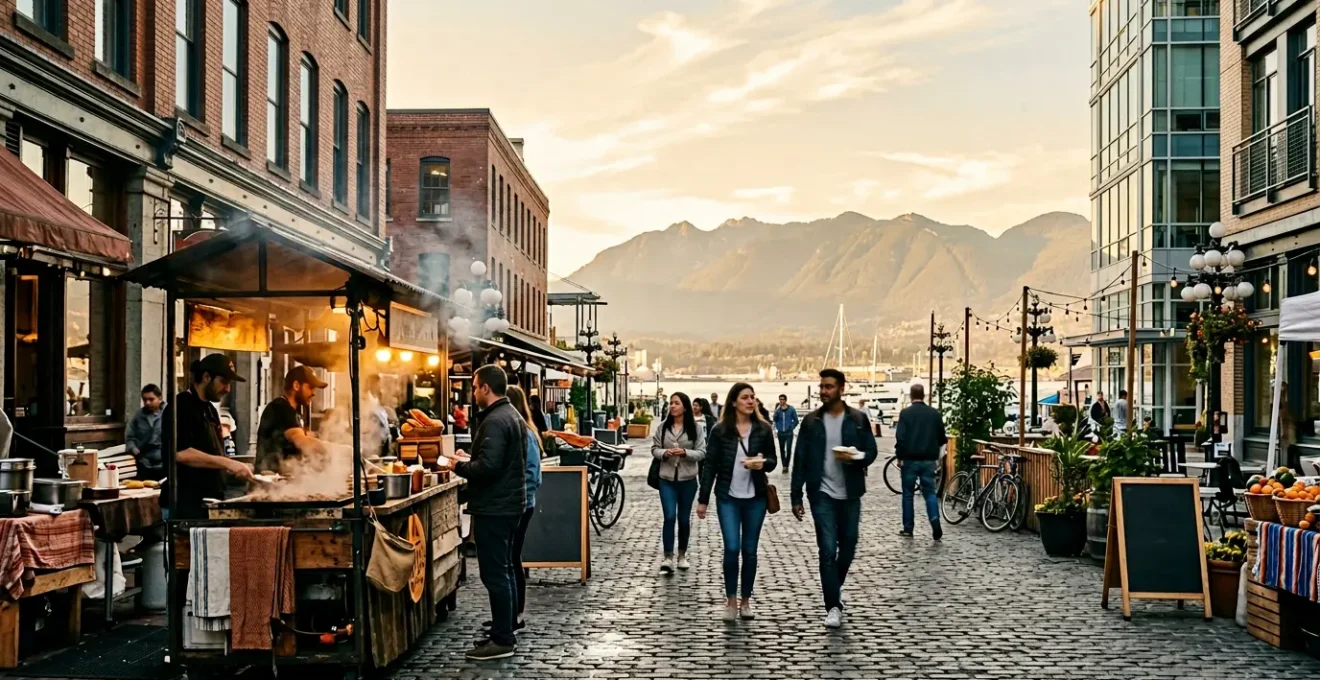
Overwhelmed by Vancouver’s food scene? Most guides offer generic lists, but a truly memorable experience in just four hours requires a strategy. This tour is not just about *what* to eat, but *how* to connect the city’s culinary dots—from iconic street food to sophisticated dining—by understanding the story behind each flavour. It’s your plan for a delicious, efficient, and insightful tasting adventure.
For a foodie couple with four hours to spare, downtown Vancouver presents a delicious dilemma. The city’s “East meets West” culinary landscape is a vibrant, sprawling mosaic of food trucks, bustling markets, and world-renowned restaurants. You could wander aimlessly through Gastown or get lost in the sensory overload of Granville Island, but with limited time, a random approach often leads to missed opportunities and long queues. The internet is filled with “Top 10” lists, but they rarely tell you the *why* or the *how*—the strategy needed to truly taste the city’s soul.
This is where we move beyond simple recommendations. What if the key to a perfect food tour wasn’t just knowing the best spots, but understanding the cultural currents that shape them? This guide is built on a “tasting-in-transit” philosophy. It’s an itinerary designed to connect Vancouver’s culinary dots, explaining the ethos of West Coast cuisine, the importance of sustainable seafood, and the practical hacks needed to navigate iconic—and notoriously busy—dining hotspots.
We’ll provide you with a strategic framework, helping you decode the city’s food scene one bite at a time. From the logistical necessities of a night market adventure to the subtle etiquette of a temple lunch, you’ll learn to navigate Vancouver like a local critic. Prepare to transform a short layover into a curated, meaningful, and utterly delicious journey.
This guide breaks down the essential strategies and concepts for crafting your perfect self-guided food tour. Below, you’ll find a detailed table of contents to navigate through each key aspect of Vancouver’s unique culinary landscape.
Summary: A Strategic Foodie’s Guide to Vancouver
- Cash or Card: What Do You Need to Survive the Richmond Night Market Lines?
- What Exactly Is “West Coast Cuisine” and Where Can You Taste It?
- The “No Reservations” Policy: How to Eat at Vij’s Without Waiting 2 Hours?
- Ocean Wise Symbol: Why You Should Look for It on Every Menu?
- Yeast Van Brewery Tour: Which 3 Breweries Are Walkable in East Van?
- The Shoes-Off Rule: How to Visit the Temple Respectfully?
- Substitution Ratio: How to Replace Sugar with Maple Syrup in Baking?
- Gastown or Granville Island: Which Food Tour Offers the Best Samples?
Cash or Card: What Do You Need to Survive the Richmond Night Market Lines?
While your 4-hour tour will focus on downtown, no discussion of Vancouver’s food scene is complete without mentioning the epic Richmond Night Market. It’s an evening adventure in itself, a dazzling spectacle of light, sound, and scent that draws over 1 million visitors annually. With more than 200 food and retail stalls, it’s a microcosm of Asian street food culture. But this chaos requires a plan, and the most critical element is your wallet. The market is a predominantly cash-only environment. Arriving unprepared means facing long ATM lines with high fees, eating into your precious tasting time.
The key to conquering the market is logistical preparation. Bring a healthy supply of small bills ($5s and $10s), as many vendors struggle to make change for larger notes. Beyond payment, timing is everything. Arriving before 6:30 PM or after 8:30 PM can drastically reduce your wait time at the entrance. For frequent visitors or groups, the “Zoom Pass” offers a way to bypass the main queue entirely. Many vendors also offer “Happy Hour” deals on food and drinks, making strategic timing even more rewarding. This isn’t just a market; it’s a game of strategy, and coming prepared is the first step to winning a delicious prize.
What Exactly Is “West Coast Cuisine” and Where Can You Taste It?
Returning to the downtown core, the term you’ll encounter on menus from Gastown to Kitsilano is “West Coast Cuisine.” But what does it actually mean? It’s less a rigid set of recipes and more a philosophy built on two pillars: hyper-local ingredients and Pacific Rim influence. At its heart, it is a celebration of the bounty provided by the Pacific Ocean and the lush British Columbia landscape. Think wild sockeye salmon, spot prawns, Dungeness crab, foraged mushrooms, and fiddlehead ferns.
As the illustration above beautifully captures, the presentation is often as natural as the ingredients themselves. This culinary style is then filtered through techniques borrowed from Vancouver’s diverse immigrant populations, particularly from Japan, China, and across Asia. A classic West Coast dish might be a perfectly seared piece of Pacific halibut served with a yuzu-miso glaze, or sablefish marinated in soy and maple. It’s this fusion that gives the cuisine its unique, vibrant identity. You can experience it on a “tasting ladder”: start with an accessible salmon burger at Granville Island, move to an Indigenous-influenced dish at Salmon n’ Bannock, and culminate in an elevated interpretation at a fine dining restaurant like Hawksworth.
The “No Reservations” Policy: How to Eat at Vij’s Without Waiting 2 Hours?
No foodie pilgrimage to Vancouver is complete without an attempt to dine at Vij’s, a legendary institution that redefined Indian cuisine in North America. However, its fame comes with a formidable challenge: a strict “no reservations” policy that can lead to wait times of two hours or more. For a couple on a tight schedule, this seems like an impossible hurdle. But like any great Vancouver experience, there’s a strategy to “hack the system.” Giving up is the amateur’s move; the seasoned foodie knows how to work the angles.
The most common mistake is arriving at the peak dinner hour of 6:30 PM. A more strategic approach is to aim for the “second seating” around 8:30-8:45 PM, catching tables as the first wave of diners departs. An even better hack is to leverage the lounge. The spacious lounge area operates on a first-come, first-served basis with a shorter waitlist, and you can order from the full menu of drinks and famous appetizers while you wait. In the summer, the rooftop patio offers another path to a quicker table. And if all else fails, remember that Vikram Vij has another restaurant, My Shanti in Surrey, which *does* accept reservations and offers the same commitment to quality.
Your Action Plan: Conquering the Wait at Vij’s
- Target the “Second Seating”: Arrive between 8:30 PM and 8:45 PM to catch tables from early diners.
- Utilize the Lounge Area: Put your name down for the lounge for a shorter wait and enjoy appetizers while you wait for your main table.
- Request the Rooftop: During summer, specifically ask about rooftop patio availability, as it often has a separate flow.
- Go Solo or Duo: Smaller parties, especially solo diners, are often seated immediately at the bar.
- Consider the Alternative: If time is critical, book a table at Vikram Vij’s sister restaurant, My Shanti, which accepts reservations.
Ocean Wise Symbol: Why You Should Look for It on Every Menu?
As you explore Vancouver’s restaurants, you’ll notice a small, circular fish symbol next to certain menu items. This is the Ocean Wise logo, and paying attention to it is a crucial part of dining authentically in this coastal city. It’s more than just a label; it’s a direct line to Vancouver’s identity as a leader in marine conservation. The symbol signifies that the seafood has been sourced from sustainable fisheries, caught or farmed in a way that ensures the long-term health of our oceans. With over 750 partners across Canada, the program’s impact is significant and its roots are deeply local.
Choosing an Ocean Wise dish is an active participation in the city’s environmental ethos. It’s a simple way to ensure your delicious meal doesn’t come at a high ecological cost. Look for seasonal specialties like BC Spot Prawns in the late spring or year-round staples like Wild Pacific Sockeye Salmon. Conversely, the program helps you avoid choices like Bluefin Tuna, which is globally overfished. This conscious choice elevates your food tour from mere consumption to responsible tourism.
Local Pride: The Vancouver Aquarium’s Ocean Wise Initiative
The Ocean Wise program is a true Vancouver success story. It was founded right here in 2005 by the Vancouver Aquarium in partnership with celebrated seafood chef Rob Clark. It began as a small, local initiative with just 16 restaurant partners, aimed at helping chefs and consumers make environmentally sustainable seafood choices. Functioning like a third-party organic certification, it verifies that the seafood is harvested responsibly. The program’s growth into a national movement is a point of local pride, directly connecting your dining experience to the city’s deep commitment to its coastal environment and marine conservation leadership. Choosing Ocean Wise isn’t just a smart choice; it’s a nod to a value system born in Vancouver.
Yeast Van Brewery Tour: Which 3 Breweries Are Walkable in East Van?
Vancouver’s food and drink culture extends well beyond its restaurants. The city is a hub for craft beer, with the epicenter located in East Vancouver, an area affectionately known as “Yeast Van.” This industrial-chic neighborhood is packed with independent breweries, most of which opened tasting lounges following a landmark 2013 change in BC’s liquor laws. For a beer-loving couple, it offers the perfect opportunity for a walkable mini-tour. The key is to pick a route that clusters breweries together to maximize tasting and minimize travel time.
A classic and highly recommended route for hop lovers is the “IPA Pilgrimage,” connecting three iconic breweries all within a 15-minute walk of each other: Strange Fellows Brewing, Parallel 49 Brewing, and East Van Brewing Company. Each offers a distinct atmosphere, from the artistic and quirky vibe of Strange Fellows to the expansive, bustling room at Parallel 49. Before you go, check the breweries’ Instagram feeds to see which food trucks will be on-site, perfectly pairing local brews with local eats. For a practical souvenir, skip the traditional glass growler and ask for a “crowler”—a 32oz can filled and sealed on the spot, ideal for travelers.
The Shoes-Off Rule: How to Visit the Temple Respectfully?
After the high-energy buzz of a brewery tour or the organized chaos of the Richmond Night Market, your palate—and your soul—might crave a moment of tranquility. Richmond, home to the night market, also offers its perfect counterbalance: a unique dining experience at the International Buddhist Temple. This is more than a meal; it’s a cultural immersion that requires a mindful approach, starting with one simple but crucial rule: remove your shoes before entering the main temple halls and dining area.
This act of respect sets the tone for the entire visit. The temple is an active place of worship, not just a tourist attraction, so dressing modestly (covering shoulders and knees) and maintaining a quiet, respectful voice are equally important. By observing this etiquette, you gain access to one of the city’s most serene and memorable food experiences.
A Palate Cleanser for the Soul: The Temple’s Vegetarian Cafeteria
The International Buddhist Temple in Richmond offers a unique culinary respite through its public, pay-by-donation vegetarian cafeteria. In a large, communal dining hall, the temple serves simple but delicious vegetarian dishes, providing a peaceful and grounding contrast to the sensory explosion of nearby food markets. This experience beautifully connects food tourism with Richmond’s rich multicultural and spiritual landscape. Following the simple rules of etiquette—removing your shoes, speaking softly—allows you to enjoy a mindful meal that serves as a “palate cleanser for the soul,” preparing you for your next high-energy culinary adventure.
Substitution Ratio: How to Replace Sugar with Maple Syrup in Baking?
While the title poses a technical baking question, let’s address the underlying intent for a visiting foodie: finding an authentic, local sweet souvenir. Many visitors to Canada immediately think of maple syrup. However, while delicious, maple syrup is primarily an Eastern Canadian product. For a true taste of British Columbia, you need to look beyond the maple leaf. Vancouver’s terroir offers unique and complex sweeteners that make for far more interesting and authentic edible gifts.
Your first stop should be the Granville Island Market. Here, you’ll find vendors selling BC Birch Syrup. Unlike the straightforward sweetness of maple, birch syrup has a more complex, savory-sweet, and slightly mineral flavor that is fantastic in both sweet and savory applications. Another hyper-local option to seek out is urban honey from organizations like Hives for Humanity. This honey captures the unique terroir of Vancouver’s urban gardens and parks. Finally, don’t overlook the incredible artisanal jams and preserves made from berries grown in the nearby Fraser Valley. A jar of local strawberry or raspberry jam is a pure taste of a BC summer.
- BC Birch Syrup: A complex, savory-sweet alternative to maple, found at specialty stalls.
- Urban Honey: Hyper-local honey from projects like Hives for Humanity, reflecting Vancouver’s unique flora.
- Fraser Valley Jams: Artisanal preserves bursting with the flavour of local berries.
Key Takeaways
- A successful food tour in Vancouver is less about a list of spots and more about a strategic itinerary that connects them.
- Understanding core local concepts like “West Coast Cuisine” and “Ocean Wise” enriches the tasting experience.
- Logistical planning is crucial for popular, no-reservation spots and cash-heavy markets to save time and frustration.
Gastown or Granville Island: Which Food Tour Offers the Best Samples?
We arrive at the classic Vancouver foodie crossroads: Gastown or Granville Island? For a couple with only four hours, choosing where to focus is a critical decision. The answer depends entirely on the style of experience you’re seeking. They are not interchangeable; each offers a fundamentally different kind of culinary adventure. Gastown provides a curated, story-driven experience with plated restaurant tastings, while Granville Island is about chaotic, sprawling discovery among market stalls and artisans.
Neither is definitively “better,” they are simply different. Gastown’s Victorian cobblestone streets are lined with cocktail bars and acclaimed restaurants, making it ideal for a more structured, evening-oriented tour. Granville Island, with its bustling market noise and direct-from-the-producer energy, is a daytime adventure perfect for those who love variety and spontaneous grazing. The following table breaks down the key differences to help you choose.
This table, based on an analysis of local food tour offerings, clarifies the distinct character of each location.
| Feature | Gastown Food Tour | Granville Island Food Tour |
|---|---|---|
| Experience Style | Curated History – Structured, story-driven with sit-down restaurant samples and cocktails | Chaotic Discovery – Sprawling, self-guided adventure of market stalls and artisans |
| Sample Types | Plated restaurant tastings, craft cocktails, gourmet dishes (7-8 stops) | Market stall bites, artisanal products, direct producer interaction (20+ tastings) |
| Atmosphere | Victorian cobblestone streets, historic architecture, cocktail bars, boutiques | Bustling market noise, ocean smells, seagulls, direct vendor interaction |
| Duration | 2.5-3 hours guided walking tour | 2-3 hours self-guided or guided market exploration |
| Price Range | $123-134 CAD per person | Self-guided free; Guided tours similar pricing |
| Best For | First-time visitors wanting Vancouver history, structured experience, evening dining | Food enthusiasts wanting variety, artisan connections, daytime market energy |
The best 4-hour tour embodies the “tasting-in-transit” spirit by connecting both. Start your morning at Granville Island for breakfast and market samples, then take the scenic Aquabus ferry downtown. Spend the afternoon exploring Gastown’s historic streets before settling in for a sophisticated cocktail and dinner. Use this guide’s strategies and insights to build your own perfect, delicious journey through Vancouver.