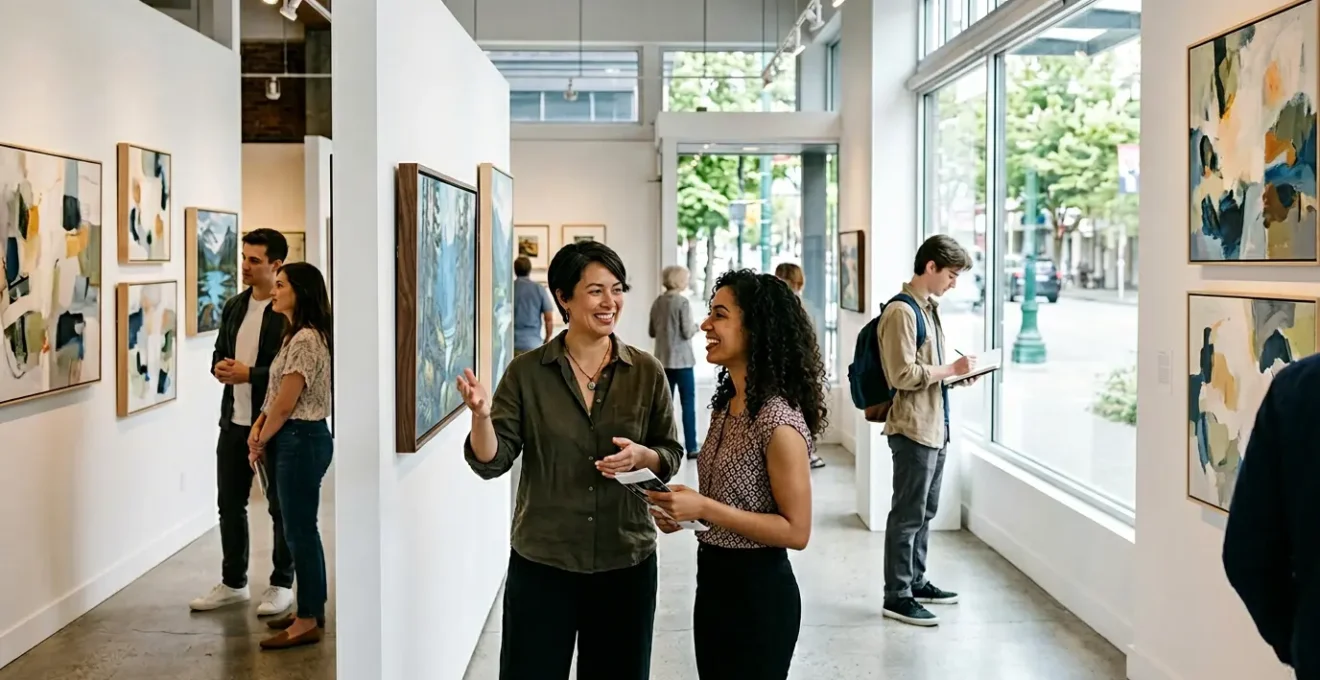
Contrary to popular belief, you don’t need a millionaire’s budget to buy meaningful art in South Granville; you just need a collector’s mindset.
- The district offers multiple “informed entry-points” like limited-edition prints and works by emerging BC artists that hold long-term value.
- Value is determined by provenance, artist reputation, and craftsmanship—not just the price tag.
Recommendation: Start by visiting on a Saturday afternoon during a new exhibition opening, when the atmosphere is social and you can learn without pressure.
Walking down South Granville, with its elegant storefronts and hushed galleries, it’s easy to feel a sense of intimidation. The polished windows display large, abstract canvases and museum-quality sculptures, and a common thought bubbles up: “This world isn’t for me.” Many assume Vancouver’s famed “Gallery Row” is a private club for the ultra-wealthy, a place where price tags have more zeros than a phone number. This perception leads many art enthusiasts to admire from the sidewalk, convinced they can only be spectators in a game reserved for seasoned collectors with deep pockets.
But what if that assumption is wrong? What if the key to this world isn’t the size of your bank account, but the quality of your curiosity? The truth is, South Granville is not a monolithic vault of expensive treasures. It’s a living, breathing art ecosystem where emerging talent is nurtured, craftsmanship is celebrated, and value is built over time. The secret isn’t in knowing how much to spend, but in understanding *what* you’re looking at. From affordable, investment-worthy screen prints by First Nations artists to pieces by the next generation of talent from Emily Carr University, accessible entry points are everywhere—if you know how to find them.
This guide demystifies Gallery Row by reframing it. We’ll move past the intimidating price tags to explore the language of value. We will look at how to start your journey, how to distinguish between different types of art, what to look for in an investment, and how to feel confident and welcome, whether you’re bringing your kids or planning to ship a masterpiece home. It’s time to step inside and see what this vibrant art scene truly has to offer.
To help you navigate this exciting world, we’ve broken down the essential knowledge you’ll need. This guide covers everything from the practicalities of shipping to the nuances of spotting your first valuable piece.
Summary: Your Guide to Navigating South Granville’s Art Scene
- How to Ship a 4-Foot Painting Home to Europe Without Damage?
- Where to Start Your Gallery Walk: From 5th to 16th Avenue?
- Emerging vs Established: Which BC Artists Are Worth Investing In Now?
- The “Don’t Touch” Rule: How to Behave in High-End Galleries with Kids?
- When to Visit South Granville for “Gallery Row” Openings?
- Screen Print or Giclée: Which Reproduction Method Holds Value Better?
- The “Slow Fashion” Movement: Which Boutiques Sell Only Ethically Made Clothes?
- How to Buy First Nations Silver Jewelry That holds Its Value?
How to Ship a 4-Foot Painting Home to Europe Without Damage?
Let’s start with a wonderful problem to have: you’ve fallen in love with a large piece of art and need to get it across the Atlantic. The logistics can seem daunting, but it’s a routine process for any reputable gallery. They are experts in protecting their artists’ work and your investment. The key is to treat shipping not as an afterthought, but as part of the acquisition. Discuss it with the gallery director upfront. They have established relationships with specialized art handlers who treat every piece with museum-level care, from custom crating to navigating international customs.
The cost will vary based on the size, value, and destination of the artwork. While it’s an additional expense, proper shipping is non-negotiable insurance for your new treasure. For context, general industry data suggests that costs can range from $80 to $200 and above for international shipments, with large, high-value pieces requiring specialized crating costing significantly more. The gallery will provide a detailed, all-inclusive quote covering everything from professional packaging and insurance to door-to-door delivery. They will also handle crucial documentation like the Certificate of Authenticity and Proof of Origin, which are essential for a smooth customs clearance process in Europe.
To ensure a seamless experience, you should ask a series of specific questions before finalizing your purchase. Being an informed buyer gives you peace of mind and ensures there are no surprises. A professional gallery will welcome these questions as a sign of a serious collector.
Your International Shipping Checklist: Questions for the Gallery
- Crating & Packaging: Does the gallery provide professional crating services, or must this be arranged separately?
- Total Cost: What is the all-inclusive estimate for crating, full-value insurance, and door-to-door delivery to my address in Europe?
- Customs Documentation: Will you provide a Certificate of Authenticity and Proof of Origin to facilitate customs?
- Insurance Coverage: What is the exact insurance coverage, and does it cover the full declared value during the entire transit?
- Tracking: Can you provide real-time tracking information for the shipment?
Where to Start Your Gallery Walk: From 5th to 16th Avenue?
South Granville’s “Gallery Row” is a beautifully compact and walkable art hub. The main cluster of galleries is concentrated along Granville Street, primarily between 5th Avenue and 16th Avenue. This density is your greatest advantage as a visitor. You don’t need a complicated itinerary; you just need a comfortable pair of shoes and a starting point. A logical approach is to begin at one end, say near 16th Avenue, and work your way north, allowing for spontaneous detours into the cafes and boutiques that dot the street.
This stretch is home to a curated collection of galleries, each with its own distinct focus. As you stroll, you’ll find spaces dedicated to contemporary painting, fine art photography, museum-quality First Nations art, and international sculpture. The experience is about more than just the art inside; it’s about the street itself. The heritage architecture, mature trees, and thoughtfully designed public spaces create an atmosphere of sophisticated calm, making it a pleasant urban walk. In fact, with nine established galleries operating within easy walking distance, it’s one of the most concentrated and rewarding art destinations in Western Canada.
Don’t feel pressured to visit every single one. A better strategy is to choose two or three galleries that pique your interest based on their window displays and spend quality time in each. The goal is not to “conquer” Gallery Row in an afternoon but to begin a conversation with the art and the environment. This relaxed approach allows for genuine discovery and prevents the dreaded “gallery fatigue,” making your visit a pleasure rather than a task.
Emerging vs Established: Which BC Artists Are Worth Investing In Now?
The question of “worth” in art is complex, blending aesthetic appeal with investment potential. In South Granville, you’ll find works by both internationally recognized, blue-chip artists and the rising stars of British Columbia. For a new collector, understanding this distinction is the first step toward making a smart purchase. Established artists offer stability and a proven track record, but emerging artists offer the excitement of discovery and a more accessible entry point into the market. A key to identifying future value is understanding the local art ecosystem, and in Vancouver, that ecosystem is deeply connected to its world-class art schools.
Case Study: The Emily Carr University Talent Pipeline
Emily Carr University of Art + Design has been the primary incubator for Vancouver’s artistic talent since 1925. Its graduates consistently feed the rosters of South Granville’s top galleries. A prime example is the ‘Vancouver School’ of photoconceptualism. Artists like Jeff Wall, Rodney Graham, and Stan Douglas, all connected to the university, rose from emerging local talents to international art stars. As the Vancouver Art Gallery’s collection demonstrates, these artists now command a significant market presence. Their careers illustrate the classic value trajectory: from promising graduate to established master, with their work appreciating significantly along the way. Following the new wave of Emily Carr graduates is a proven strategy for spotting investment-worthy talent.
So how do you apply this? When you’re in a gallery, ask the director about the artists. “Where did they study?” “Are they early in their career?” “Who are the local critics following?” A good gallerist is a storyteller and an educator. They are passionate about their artists’ careers and are often the first to spot a rising star. They can show you how an artist’s style is evolving and why their work is generating a buzz. By focusing on graduates from prominent institutions like Emily Carr, you’re not just buying a painting; you’re investing in the next chapter of BC’s rich artistic history.
The “Don’t Touch” Rule: How to Behave in High-End Galleries with Kids?
Bringing children into a high-end art gallery can feel like walking a tightrope. The pristine white walls, silent rooms, and priceless objects can be a source of anxiety for any parent. However, introducing children to art early is a gift, and South Granville’s galleries are more welcoming than you might think, provided you come prepared with a strategy. The goal is to transform the visit from a stressful ordeal into an engaging adventure for them and a relaxing experience for you and other patrons.
The fundamental rule, of course, is “don’t touch.” Explain to your children beforehand that art is for our eyes, not our hands, and that the oils on our skin can damage the work over time. A simple game like “Hands Behind Your Back, Art Detective!” can make this rule feel fun rather than restrictive. The key is to keep the visit short and focused. Aim for 15-20 minutes in one or two galleries, rather than a long, tiring march through the entire district. This keeps their attention sharp and meltdowns at bay.
Planning ahead is everything. Many galleries are quieter during weekday mornings, making for a more relaxed visit than a bustling Saturday afternoon. Turning the experience into a game can also work wonders. Bring a small sketchbook and encourage them to draw their favorite piece, or play “I Spy” with colors, shapes, and textures. By engaging them actively, you channel their energy and teach them a new way of seeing. Remember, the gallerists are people too; many are parents themselves and appreciate the effort to cultivate the next generation of art lovers.
Action Plan: The South Granville with Kids Survival Guide
- Check the Hours: Most galleries are open Tuesday-Saturday, 10:30 AM to 5:30 PM. A quick check of the gallery’s website avoids disappointment.
- Start with Space: Choose larger, multi-room galleries first, which allow for a quick change of scenery if a child becomes restless.
- Play “Art Detective”: Bring a small sketchbook and pencils to have them find and draw specific colors, shapes, or objects in the art.
- Plan a Reward: A post-gallery stop at a nearby South Granville café or bakery can be a powerful motivator.
- Visit during Off-Peak Times: Weekday mornings are generally much quieter than busy Saturday afternoons, creating a lower-stress environment.
When to Visit South Granville for “Gallery Row” Openings?
While a quiet weekday visit offers a chance for focused contemplation, the best time to experience the social pulse of South Granville’s art scene is during an exhibition opening. These events are a fantastic, low-pressure way for newcomers to dip their toes into the art world. Forget the stereotype of a stuffy, exclusive affair; openings are lively, welcoming events where you can meet the artist, chat with the gallery director, and mingle with other art lovers over a glass of wine. They are designed to be a celebration.
Typically, these receptions are held on Saturday afternoons, a tradition that transforms the entire street into a vibrant hub of activity. You can wander from one gallery to the next, experiencing a diverse range of new work in a festive atmosphere. This is the perfect environment to learn without feeling the pressure to buy. You can listen to the artist talk about their process, observe what pieces are drawing a crowd, and ask questions in a casual setting. It’s an unparalleled opportunity for free art education and a fun way to spend an afternoon in Vancouver.
Case Study: The Annual South Granville Gallery Hop
The single best event for a first-timer is the annual South Granville Gallery Hop, organized by the South Granville Gallery Association (SGGA). This free event, typically held in the fall, sees all nine member galleries coordinate their openings for a single spectacular evening. According to local galleries like Kurbatoff Gallery, which participates in the event, the Gallery Hop is designed as the perfect introduction to the district. Visitors can explore the entire row from 5th to 15th Avenue, enjoy refreshments, meet multiple artists, and get a comprehensive snapshot of the neighbourhood’s artistic offerings in one go.
To find out about upcoming openings, the best method is to visit the individual gallery websites or the SGGA’s site and sign up for their email newsletters. This way, you’ll get invitations directly to your inbox. Attending an opening demystifies the gallery experience, proving that these spaces are not silent temples but dynamic community hubs.
Screen Print or Giclée: Which Reproduction Method Holds Value Better?
For many aspiring collectors, an original painting by an established artist is out of reach. This is where limited-edition prints come in—they are a brilliant and respected informed entry-point into the art market. However, not all prints are created equal. The two most common types you’ll encounter are screen prints and giclées, and understanding the difference is crucial for an investment. A giclée is essentially a high-quality inkjet print. While the image is accurate, it’s a digital reproduction. A screen print, on the other hand, is a handmade process where the artist applies layers of ink through a stencil. This hands-on involvement imbues the work with a unique character and, often, greater value.
The key factors that determine a print’s value are the artist’s signature, the edition size (the smaller, the better), and the method of creation. Because screen printing is a more laborious, artistic process, these prints are often produced in smaller, more valuable editions. They are considered by many to be closer to an “original” work than a digital reproduction. This is particularly true in the world of Northwest Coast art, where printmaking has a long and celebrated history.
Many renowned artists use printmaking as a primary medium for their expression, and these works are highly sought after by collectors. As a leading Vancouver gallery specializing in this field notes, the right kind of print is a serious investment.
Limited edition screen prints are particularly significant for many renowned First Nations artists, often holding or increasing in value.
– Douglas Reynolds Gallery, Northwest Coast Indigenous Art – Douglas Reynolds Gallery
When considering a print, look for the artist’s pencil signature and the edition number (e.g., “15/50”). Ask the gallery director about the process used to create it. By choosing a limited-edition screen print by a respected artist, you are acquiring a piece with both artistic integrity and a strong potential for appreciating value.
The “Slow Fashion” Movement: Which Boutiques Sell Only Ethically Made Clothes?
The “collector mindset” that defines South Granville’s art scene doesn’t stop at the gallery door. It extends to the entire neighbourhood, influencing the character of its retail and culinary offerings. The same clientele that values cultural provenance and lasting craftsmanship in a painting applies those principles to other aspects of their lives, including fashion. This has fostered a unique retail environment that complements the art-centric focus of the district, making it a hub for the “slow fashion” movement in Vancouver.
While the area is known for high-end international brands, it is also home to a curated selection of independent boutiques that champion ethically made, locally designed, and artisan-crafted clothing and accessories. These shops operate on the same philosophy as the galleries: quality over quantity, timelessness over trends, and a deep appreciation for the story behind the product. Finding these gems requires the same approach as finding great art: look beyond the big names and seek out the smaller, more personal storefronts.
Case Study: The South Granville Collector Mindset in Fashion
The identity of South Granville is a holistic blend of art, design, and lifestyle. The neighbourhood attracts a discerning customer who understands that true value lies in craftsmanship, whether it’s in an oil painting or a hand-stitched leather bag. This creates a symbiotic relationship between the art galleries and the surrounding boutiques. A visitor might spend the morning appreciating the brushstrokes of a BC artist and the afternoon admiring the tailoring of a Vancouver-based designer. This synergy makes an afternoon in South Granville a cohesive experience in appreciating quality and supporting local talent, from the art on the walls to the clothes on the racks.
To find these boutiques, look for signs of a curatorial eye. Do they feature local designers? Do they emphasize natural materials and sustainable practices? Talk to the shop owners. Just like the gallery directors, they are passionate advocates for the creators they represent. An afternoon spent browsing these shops is not just shopping; it’s an extension of the gallery walk, a continuation of the search for beauty and quality that defines the entire district.
Key Takeaways
- Art collecting in South Granville is accessible if you focus on value derived from craftsmanship and provenance, not just price.
- Informed entry-points like limited-edition screen prints and works by emerging BC artists are smart, affordable investments.
- The district is a complete “art ecosystem” where galleries, boutiques, and cafes create a cohesive cultural experience.
How to Buy First Nations Silver Jewelry That holds Its Value?
Perhaps no category of art better encapsulates the principles of a smart investment than Northwest Coast First Nations jewelry. These are not mere accessories; they are powerful works of art, imbued with generations of cultural history and masterful craftsmanship. In South Granville, you can find museum-quality pieces that represent a tangible connection to the heritage of British Columbia. Buying a piece of silver or gold jewelry from a master artist like Bill Reid or Robert Davidson is one of the most secure investments you can make in the art world. Its value is anchored in both its material worth and its profound cultural provenance.
The key to buying jewelry that holds its value is identical to buying any other form of art: buy from a reputable, specialist gallery. A trusted gallery guarantees authenticity, ensures the artist has been compensated fairly, and provides the documentation and history that underpins the piece’s long-term worth. They can tell you the story behind the crests and figures depicted—the Thunderbird, the Raven, the Bear—and explain the artist’s place within their cultural tradition. This narrative is an inseparable part of the jewelry’s value.
Benchmark for Investment: The Douglas Reynolds Gallery
A prime example of such a trusted institution is the Douglas Reynolds Gallery. Established in 1995 with 35 years of specialized experience, the gallery is a benchmark for investment-grade Northwest Coast Indigenous art. It represents artists from the Haida, Tlingit, and Coast Salish nations, showcasing masterpieces by legends like Bill Reid alongside works by exciting emerging talents. The gallery’s rigorous curation and membership in the Art Dealers Association of Canada provide an ironclad guarantee of authenticity. By purchasing from a gallery of this calibre, a collector is not just acquiring a beautiful object, but a piece of cultural heritage with a secure and appreciating value.
When considering a piece, look for the artist’s signature or mark. Ask about the artist’s history and reputation. A piece from a recognized master or a highly touted emerging artist from a respected gallery is an investment that will not only bring you a lifetime of enjoyment but will also stand as a significant asset in your collection. It is the ultimate expression of the collector mindset: acquiring an object of profound beauty and lasting worth.
Your journey into the art world doesn’t require a fortune, only an open mind and a willingness to learn. By starting with a visit to South Granville’s galleries, you are taking the first step towards becoming not just a buyer, but a true collector. Start exploring today to discover the piece that speaks to you.