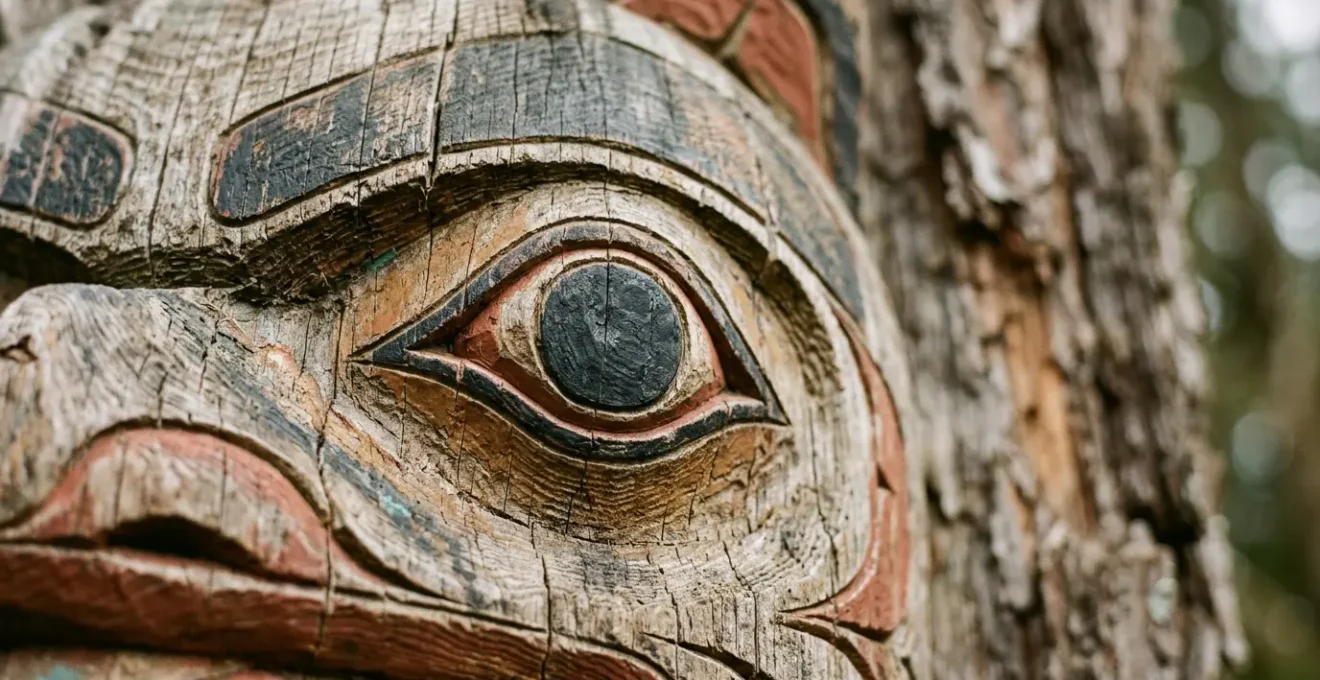
Many visitors try to ‘read’ a totem pole like a book, but this common approach misses the profound depth of Northwest Coast art. The figures are not a simple alphabet but a complex visual language for stories belonging to specific families and clans. True understanding comes not from deciphering symbols, but from respectfully witnessing the narrative, learning the cultural context, and recognizing the artists who keep these stories alive.
You’re standing in Stanley Park, before the collection of totem poles at Brockton Point. The scale is immense, the artistry breathtaking. A question naturally forms in your mind: “What does it all mean?” You try to decipher the figures—the eagle, the bear, the raven—searching for a linear story, a beginning, middle, and end. It’s a natural impulse for a curious visitor, the desire to connect with and understand the powerful art before you.
Most guides might offer simple, one-to-one translations: Raven is the trickster, Eagle represents prestige. While these associations hold some truth, they are vast oversimplifications. This approach reduces a symphony to a single note, missing the intricate harmonies of history, lineage, and law embedded in the cedar. It treats a pole as a static object to be decoded, rather than a living story to be heard.
But what if the most important question isn’t “what does it mean?” but rather “whose story is this?” This guide reframes your perspective. As a cultural educator, I invite you to shift from trying to ‘read’ a pole to learning how to ‘respectfully witness’ it. This is about understanding the art not as a puzzle to be solved, but as an invitation into a worldview, a legal document carved in wood, and a testament to the resilience of the First Nations of the Pacific Northwest.
Together, we will explore the deeper meaning behind the art forms, from the monumental poles to the intricate details of a bentwood box. We will discuss why certain stories are protected, how to appreciate the art in galleries, and most importantly, how to engage with this profound culture in a way that is both meaningful for you and respectful to its creators and keepers.
This article provides a structured journey to deepen your appreciation of Northwest Coast Indigenous art in Vancouver. The following sections will guide you through specific masterworks, cultural protocols, and practical ways to engage with this living heritage.
Summary: How to Read a Totem Pole: Understanding the 3 Main Figures?
- Bentwood Boxes: Why Are They Cookware and Art at the Same Time?
- The Jade Canoe: What Does the Sculpture Represent for Haida Gwaii?
- The Thunderbird Myth: Why Is It Forbidden to Copy Certain Crests?
- Tuesday Evenings: How to Visit the Art Gallery for Donation Pricing?
- Screen Print or Giclée: Which Reproduction Method Holds Value Better?
- Beyond Souvenirs: Where to Buy High-Fashion Indigenous Clothing?
- Raven or Eagle: Which Spirit Animal Carving Best Suits Your Personality?
- How to Experience Indigenous Culture in Vancouver Without Being Intrusive?
Bentwood Boxes: Why Are They Cookware and Art at the Same Time?
Before the towering totem poles, consider the humble yet miraculous bentwood box. It embodies the core of Northwest Coast ingenuity: the seamless fusion of function and spirit. These containers are not assembled from four separate pieces of wood. Instead, a single cedar plank is masterfully kerfed, steamed, and then folded into a perfect box. The genius of this process is revealed in the final product. As the Museum of Anthropology at UBC notes, bentwood boxes are “made from cedar planks, which have been steamed, cut and bent at a 90-degree angle to create a watertight and seamless structure.”
This watertight integrity meant they were the ultimate utilitarian object. They were used for storing water, precious regalia, and even for cooking, with hot stones dropped into the water-filled box to boil food. Imagine a single object serving as both a pot and a treasure chest. This versatility made them central to daily life and ceremonial practice. But their function never overshadowed their form. The smooth, uninterrupted surfaces created by the single-plank construction provided a perfect canvas for another layer of meaning.
The exterior of these boxes became a place to display family crests and stories through intricate carving and painting. The formline designs—the characteristic swelling and tapering lines, ovoids, and U-forms—wrap around the corners as if the creature depicted is alive, hugging the contents within. A box used to store a shaman’s regalia might be carved with the powerful spirit figures he communed with. A box for a high-ranking chief could display crests that assert his lineage and rights to certain territories. Thus, a simple cooking vessel is also a legal document, a history book, and a masterpiece of abstract design.
The bentwood box teaches us the first lesson in understanding this art: in Northwest Coast worldview, there is no separation between utility, beauty, and spiritual significance. An object is never “just” a tool.
The Jade Canoe: What Does the Sculpture Represent for Haida Gwaii?
If you fly into Vancouver, your first encounter with monumental Indigenous art might be at the international airport (YVR). There, dominating the terminal, is Bill Reid’s masterpiece, “The Spirit of Haida Gwaii: The Jade Canoe.” This is not an ancient artifact but a modern bronze sculpture, yet it carries the weight of millennia. It depicts a canoe crowded with thirteen mythological and human figures, a mix of animal and spirit beings paddling together in a state of dynamic tension. The piece itself is massive, and its presence transforms the sterile airport environment into a place of myth.
The sculpture is a complex metaphor for the interconnected, often conflicting, nature of life and the modern world. You see the powerful Bear, the trickster Raven steering the boat, the human Shaman, and other figures from Haida cosmology. They are not all paddling in the same direction; some are arguing, some seem lost in thought. It’s a vessel of diverse beings on a single journey, a powerful symbol for Canada and the world. The late artist Bill Reid himself described the scene with a poignant sense of uncertainty. In an accompanying poem, he wrote of the figures, “Here we are at last, a long way from Haida Gwaii, not too sure where we are or where we’re going …but somehow managing to appear to be heading in some direction,” a sentiment captured by the Richmond News.
This quote reveals the heart of the sculpture’s meaning. It’s not a triumphant historical narrative but a deeply honest reflection on a journey of survival, cultural continuity, and navigating an uncertain future. The figures are not just from the ancient past; they are here, now, grappling with their place in the world. It represents the Haida Nation’s enduring spirit, leaving their remote, beautiful islands of Haida Gwaii to engage with the wider world, bringing their stories and their worldview with them. It’s a statement that these cultures are not static relics; they are alive, evolving, and very much part of the contemporary conversation.
When you see this sculpture, you are witnessing a profound statement about cultural resilience and the complex, ongoing journey of the Haida people. It’s a story of leaving home while bringing your entire world with you.
The Thunderbird Myth: Why Is It Forbidden to Copy Certain Crests?
A visitor might see a powerful Thunderbird design on a totem pole or a print and think, “I want that symbol.” This impulse, while stemming from admiration, touches upon one of the most important and misunderstood concepts in Northwest Coast culture: narrative sovereignty. Crests like the Thunderbird, Wolf, or Killer Whale are not generic decorative motifs. They are property, as real and as fiercely protected as a deed to land. These are specific, inherited designs that signify a family’s lineage, status, history, and rights. To use a crest that does not belong to you is a serious offense, akin to identity theft and a violation of Indigenous law.
This concept of ownership is deeply rooted in history and the social structure of First Nations. Crests are passed down through specific family lines, often originating from a story where an ancestor had a supernatural encounter with a being who bestowed a song, dance, name, or image upon them. That crest then becomes the exclusive property of their descendants. Displaying it on a totem pole or ceremonial regalia is a public declaration of that family’s identity and their rightful place in the community. It’s a visual contract that validates their claims to names, fishing sites, or the right to perform certain ceremonies.
The importance of protecting these crests was amplified by a dark chapter in Canadian history. For 67 years, from 1884 to 1951, the Canadian government banned the potlatch, the central ceremony where these rights and crests were publicly displayed and validated. This attempted cultural erasure made the act of preserving and now reclaiming these family-owned narratives even more critical. Copying a crest is not an act of flattery; it dilutes and disrespects the generations of effort to keep these specific family stories alive. It is an echo of the colonial attempt to commodify and generalize a culture that is built on specificity and inherited privilege.
So, when you see a Thunderbird, appreciate its power and beauty, but also understand it as a specific family’s story. The real myth to dispel is that these images are in the public domain. They are not.
Tuesday Evenings: How to Visit the Art Gallery for Donation Pricing?
For many longtime Vancouverites, “Tuesday evenings by donation” at the Vancouver Art Gallery was a beloved institution, a way to connect with art affordably. While that specific weekly tradition has evolved, the spirit of accessibility remains a key part of the city’s art scene. If you’re looking to experience the incredible Indigenous art held within the Vancouver Art Gallery and other institutions, there are still excellent opportunities to do so. The primary program to be aware of is “First Free Fridays.”
Currently, the Vancouver Art Gallery offers free admission for all visitors on the first Friday of every month from 4 PM to 8 PM, thanks to generous sponsorship. This is the perfect opportunity to see the gallery’s significant collection, which includes historical pieces and powerful contemporary works by leading Indigenous artists. It’s important to note that these evenings are very popular, so booking a spot online in advance is highly recommended to guarantee entry and avoid disappointment.
Beyond this monthly event, the gallery’s commitment to accessibility shines for younger visitors. Admission is always free for youth aged 18 and under, making it a fantastic educational destination for families. If your visit doesn’t align with the first Friday, don’t be discouraged. The Bill Reid Gallery of Northwest Coast Art, located downtown, is another essential stop with its own admission structure, and its focused collection offers an immersive experience. Similarly, the UBC Museum of Anthropology (MOA), home to some of the world’s most significant Northwest Coast collections, is a destination in itself. Exploring these different venues allows you to see a broader range of art and support multiple institutions dedicated to preserving and showcasing this heritage.
By planning ahead, you can engage with world-class art in a way that is both enriching and accessible, ensuring the stories held within these institutions are available for everyone to witness.
Screen Print or Giclée: Which Reproduction Method Holds Value Better?
After being moved by the monumental art, you may wish to take a piece of it home. In galleries, you’ll encounter two main types of art prints: screen prints (or serigraphs) and giclées. To the untrained eye, they may look similar, but in the world of collecting Northwest Coast art, they are vastly different in terms of authenticity, connection to the artist, and long-term value. Understanding this difference is crucial to making a meaningful purchase.
A screen print is a hands-on, traditional process. The artist (or a master printer under their supervision) creates stencils for each color, and ink is physically pulled across a screen onto the paper. This creates a tactile, layered effect where the ink has a slight relief. It’s a labor-intensive craft that is deeply connected to the history of Northwest Coast printmaking, pioneered by artists like Bill Reid and Roy Vickers. Conversely, a giclée is a high-quality digital inkjet print. While the image reproduction can be precise, the process is mechanical, creating a flat, non-tactile surface. It lacks the direct artist-involved labor that is so valued in the screen printing tradition.
For collectors and those who want a deeper connection to the art, the limited-edition screen print is unequivocally the better choice. Its value is tied to its authenticity, marked by two key features in the margin: the artist’s hand-signed pencil signature and the edition number (e.g., “50/200”). These marks are a guarantee of the artist’s approval and the scarcity of the print. A giclée may have a printed signature and be an “open edition,” meaning an unlimited number can be produced, which significantly lowers its collectible value. When you buy a signed, limited-edition screen print, you are acquiring a piece of the artist’s process, not just their image.
Buyer’s Checklist: How to Ensure You’re Buying an Authentic Indigenous Art Print
- Verify Artist Signature: Look for a hand-signed pencil signature in the margin. It should not be printed or stamped as part of the image.
- Check Edition Numbering: Authentic limited editions will show a fraction format like ’25/150′ (print number 25 out of a total edition of 150) or ‘A/P’ for a rare Artist’s Proof.
- Examine Ink Quality: Feel the surface if possible. Screen prints often have a tangible, layered ink with a slight texture or relief, whereas giclées are perfectly flat digital prints.
- Confirm Indigenous Attribution: The gallery or documentation should clearly credit the artist’s Nation (e.g., Haida, Coast Salish, Kwakwaka’wakw, Tsimshian), connecting the work to its cultural origin.
- Purchase from Verified Galleries: Buy from reputable, Indigenous-owned or partnered venues like Skwachàys Lodge’s Urban Aboriginal Fair Trade Gallery, the Bill Reid Gallery, or the UBC Museum of Anthropology shop to ensure authenticity and fair compensation for the artist.
Choosing a screen print is an investment in the artist and the continuation of a vital artistic tradition, ensuring your purchase is more than a picture—it’s a piece of culture.
Beyond Souvenirs: Where to Buy High-Fashion Indigenous Clothing?
The desire to wear and celebrate Indigenous design is growing, moving far beyond tourist souvenirs into the realm of high fashion and “wearable art.” In Vancouver, this shift is championed by innovative artists and social enterprises that ensure your purchase is not only beautiful but also ethical and impactful. This is about participating in economic reconciliation—using your purchasing power to directly support Indigenous artists and their communities. It’s a powerful way to move from passive admirer to active supporter.
The leading example of this model in Vancouver is Skwachàys Lodge. This remarkable place is Canada’s first Indigenous Arts Hotel, but it’s much more than that. It’s a social enterprise that combines a boutique hotel with a street-level art gallery, the Urban Aboriginal Fair Trade Gallery. The revenue from the hotel and gallery directly funds a residency program that provides housing and studio space for 24 Indigenous artists. When you buy a piece of jewelry, a print, or a fashion item here, you are participating in a holistic system. The artists receive a fair price for their work, and the profits circle back to support the next generation of creators.
Case Study: The Skwachàys Lodge Social Enterprise Model
Skwachàys Lodge in downtown Vancouver combines a boutique hotel with a street-level Indigenous art gallery, providing housing and studio space for 24 Indigenous artists through a residency program. Since its inception, this model has provided a crucial platform for artists to live and work in an often-unaffordable city. Artists receive fair pricing, typically 30-60% of the retail price, for their work sold in the gallery. This social enterprise model ensures that tourist and art-sales dollars directly support cultural revitalization and Indigenous housing, transforming every purchase into an act of economic reconciliation.
When shopping, look for this kind of story. Ask where the art comes from and who the artist is. Reputable galleries like Skwachàys, the Bill Reid Gallery, and the MOA gift shop will always provide artist attribution, including their Nation. This transparency is a hallmark of an ethical vendor. By seeking out these venues, you avoid the mass-produced, culturally appropriated items found in tourist traps and instead invest in authentic pieces that carry a real story and provide a direct benefit to the artist and their community.
Wearing Indigenous fashion becomes a statement of solidarity. It celebrates living artists, supports their economic well-being, and helps carry their stories forward into the world in a vibrant, contemporary way.
Raven or Eagle: Which Spirit Animal Carving Best Suits Your Personality?
It’s one of the most common questions visitors ask, often with the best intentions: “Am I a Raven or an Eagle person?” This question frames Northwest Coast crests through the lens of a zodiac sign or a personality quiz. However, this is the most fundamental misunderstanding of how these powerful symbols function. In Haida culture, and many other Northwest Coast nations, you don’t choose your crest; it chooses you. Your primary crest, Raven or Eagle in the Haida moiety system, is determined by your mother’s lineage. It is an inherited identity, not a personal preference.
The entire Haida nation is divided into two “moieties” or clans: Raven and Eagle. If your mother is Raven, you are Raven. If she is Eagle, you are Eagle. This structure forms the basis of social and ceremonial life. Traditionally, you must marry someone from the opposite moiety to ensure social balance. The crests, therefore, are not about your individual personality traits. They are about your unbreakable connection to your ancestors, your family, and your specific place within the nation. The crests an artist uses are those they have an inherited right to depict. For example, as Indigenous Foundations at UBC clarifies, “some Kwakwaka’wakw families of northern Vancouver Island belonging to the Thunderbird Clan will feature a Thunderbird crest and familial legends on their poles.”
So, how should a respectful visitor approach these figures? Instead of asking “which one am I?”, try asking “what story does this figure tell in this context?” The role of Raven, for instance, is incredibly complex. In the oral traditions of the local Musqueam, Squamish, and Tsleil-Waututh nations, he is a transformer and a trickster, credited with bringing light to the world but often doing so through selfish or mischievous acts. He is a cultural hero, but not a simple one. The Eagle often symbolizes vision, power, and high status. But these are broad strokes. The specific meaning is always tied to the story being told by the family who owns that story.
The best way to honor the art is to let go of the idea of choosing a “spirit animal” and instead embrace the opportunity to listen. Appreciate the artistry, ask about the story, and admire the figure that resonates with you—not because it reflects you, but because you have been given the privilege to witness its story.
Key Takeaways
- Shift your mindset from “reading” symbols to “respectfully witnessing” a story. The figures are a visual language, not a simple alphabet.
- Recognize that crests like Thunderbird, Raven, and Wolf are not generic designs but are privately owned, inherited property of specific families and clans.
- Understand that buying authentic art from Indigenous-owned galleries or social enterprises is an act of economic reconciliation that directly supports artists and cultural revitalization.
How to Experience Indigenous Culture in Vancouver Without Being Intrusive?
You’ve learned to see the art differently, to understand the stories and the protocol behind the crests. Now comes the most important part: putting that understanding into practice. Experiencing Indigenous culture in Vancouver is not about being a passive spectator; it’s about engaging actively and respectfully. The totem poles at Brockton Point are the most visited tourist attraction in all of British Columbia, a testament to their power. With so many visitors, our individual actions matter immensely in creating a respectful environment.
The key is to move from consumption to contribution. Instead of just taking a photo, take a moment. Read the plaques that identify the poles and the artists, if available. Think about the stories of lineage and place they represent. Better yet, seek out experiences led by Indigenous people themselves. Consider a walking tour with Talaysay Tours, an Indigenous-owned company, where guides from the local nations share their knowledge of the land and stories while you walk through Stanley Park. Here, you are not just looking at a pole; you are hearing the context from the culture it belongs to.
Your greatest power as a visitor lies in your economic choices. Make a conscious decision to support Indigenous-owned businesses. Instead of buying a generic souvenir, purchase a print from the Urban Aboriginal Fair Trade Gallery at Skwachàys Lodge, knowing your money supports an artist’s housing. Pay the admission to the Bill Reid Gallery, understanding that your ticket funds exhibitions and educational programming for the next generation. Buy a book about formline design from the MOA gift shop. These are not just transactions; they are investments in cultural continuity. They send a clear message that you value authentic culture and want to see it thrive.
Your journey to understanding begins now. The next time you stand before a totem pole, don’t just take a photo—take a moment. Listen for the story, seek out the artist, and become a respectful witness to a living, breathing, and thriving culture.