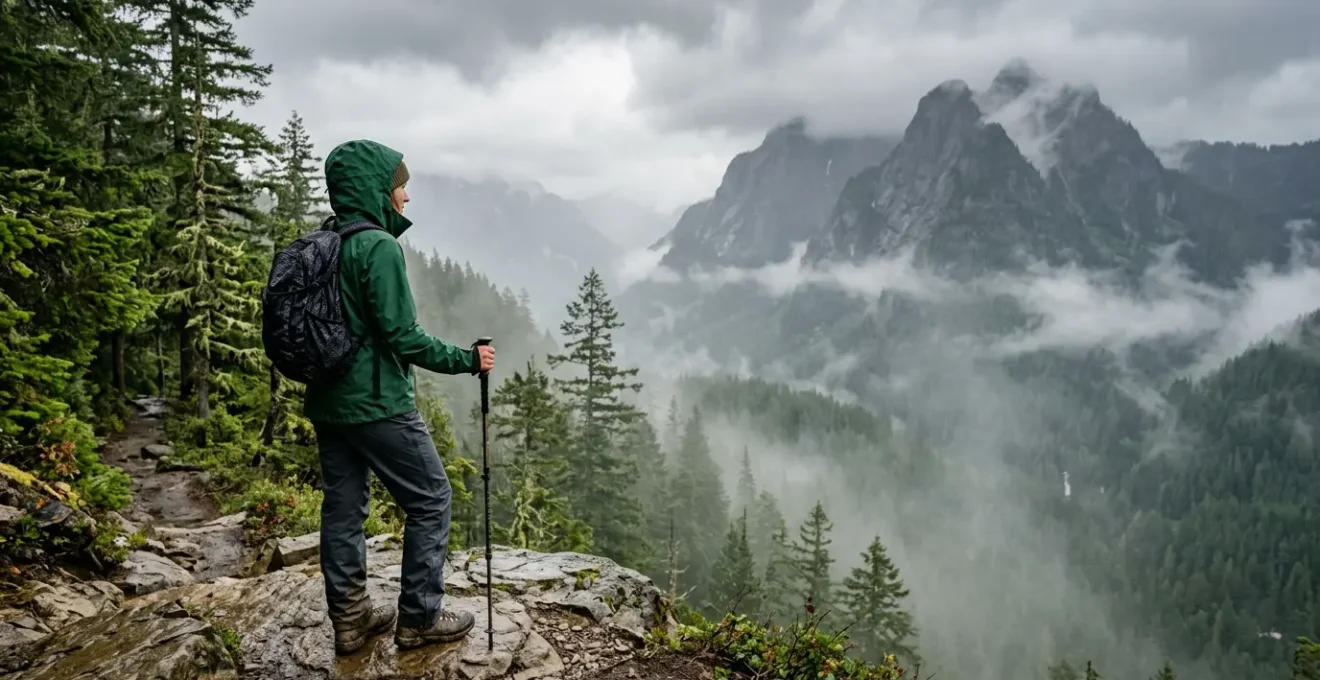
The secret to a successful Vancouver outdoor excursion isn’t checking the forecast; it’s vetting the tour operator’s operational resilience before you book.
- A tour’s likelihood of cancellation in rain depends entirely on the operator’s gear quality, guide certification, and logistical preparedness—not just the weather itself.
- Booking directly and asking specific questions about rain policies reveals the difference between a real guarantee and a useless “paper guarantee.”
Recommendation: Prioritize operators who openly advertise their professional-grade gear (like Gore-Tex or drysuits) and certified guides, as this is the best indicator they are equipped to run tours safely and comfortably in the rain.
You have three days in Vancouver. You’ve booked flights and a hotel, and your heart is set on experiencing the wild Pacific Northwest coast. But there’s a nagging worry in the back of your mind, a word you’ve heard from everyone: “Raincouver.” The fear isn’t just about getting wet; it’s about your expensive, pre-booked whale watching or mountain hiking tour being cancelled at the last minute, leaving a gaping, disappointing hole in your tight itinerary.
The typical advice is to “pack a good raincoat” or “have indoor backups.” This is useless when your goal is a specific outdoor adventure. The truth is, rain is a constant here. It’s part of the landscape. Trying to dodge it is a fool’s errand. The real solution lies in a complete mindset shift. You need to stop looking at the sky and start looking at the operational guts of the tour companies themselves.
The key to a rain-proof vacation isn’t about avoiding the weather; it’s about choosing an operator whose entire business is built to handle it. This guide won’t give you weather-predicting tricks. It will give you a practical framework for vetting a tour operator’s resilience infrastructure. We’ll show you how to analyze their guides, their gear, their booking policies, and their logistical Plan Bs so you can confidently book an excursion that is built to run, rain or shine.
This article provides a complete roadmap for navigating Vancouver’s outdoor tour market. You’ll learn how to spot a robust operator from a fair-weather one, ensuring your limited time here is spent on adventure, not stuck in a hotel room staring at a cancellation email.
Summary: How to Choose a Vancouver Outdoor Tour That Rain Can’t Ruin
- Why Hiring a Guide for the North Shore Mountains Can Save Your Life?
- Gore-Tex or Poncho: What to Wear for a 4-Hour Kayak Tour in Drizzle?
- Small Group vs Private Tour: Which Is Better for a Family of 5?
- The Booking Error That Costs Travelers $200 CAD in Cancellation Fees
- When to Book a Whale Watching Tour to Guarantee 90% Sighting Success?
- Waterproof vs Water-Resistant: What Jacket Grade Do You Need for November?
- Squamish or Harrison Hot Springs: Which Day Trip Fits a Rainy Forecast?
- Capilano Suspension Bridge or Lynn Canyon: Which Treetop Walk Fits Your Family?
Why Hiring a Guide for the North Shore Mountains Can Save Your Life?
The North Shore mountains are not a city park. They are a rugged, wild backcountry that happens to sit on the edge of a major metropolis. In the rain, trails can become slick, creeks can swell into impassable torrents, and visibility can drop to near zero in minutes. A certified guide isn’t a luxury here; they are your single most important piece of safety equipment. Their value isn’t just in navigation; it’s in their deep, localized knowledge of the terrain’s behaviour under stress.
Professionally certified guides are the core of an operator’s resilience infrastructure. In Canada, the gold standard is the Association of Canadian Mountain Guides (ACMG). Guides with this certification have proven their competence in risk assessment, weather analysis, and emergency response. According to the Association of Canadian Mountain Guides, their members undergo rigorous certification, which includes a professional duty to create and execute safe travel plans in hazardous mountain terrain. This isn’t just about knowing the way; it’s about knowing ten other ways when the first one becomes unsafe.
Case Study: The Local Knowledge Advantage
Top-tier operators like Vancouver Mountain Guides showcase this principle in action. Their ACMG-certified professionals don’t cancel when alpine forecasts look grim; they pivot. They possess intimate knowledge of North Shore microclimates and trail conditions, knowing which paths drain efficiently (like those in Lynn Headwaters) versus those that turn into dangerous mud pits. When a planned route becomes unsafe, they have pre-scouted Plan B options in areas like the Seymour Valley, ensuring clients get a full, safe day of adventure instead of a cancellation notice. This real-time adaptability is what you’re paying for.
A certified guide knows that a drizzle at sea level can be a freezing, wind-driven downpour at 1,000 meters. They know which trails are sheltered by old-growth canopy and which are dangerously exposed. Hiring a guide isn’t just about being shown the path; it’s about buying the expertise to ensure there’s always a safe path to be shown.
Gore-Tex or Poncho: What to Wear for a 4-Hour Kayak Tour in Drizzle?
When you’re on the water for hours in a classic Vancouver drizzle, the difference between comfort and the first stages of hypothermia comes down to one thing: gear quality. A cheap plastic poncho might suffice for a 10-minute dash to a bus stop, but it’s a dangerously inadequate choice for a multi-hour kayak tour. The problem isn’t just water getting in; it’s that your own sweat can’t get out, leaving you soaked from the inside. This is a common mistake that ruins countless tours.
A reputable kayak operator’s investment in high-quality gear is a direct reflection of their commitment to guest safety and comfort. This is a non-negotiable part of their operational guts. Instead of flimsy ponchos, they provide full drysuits or paddling suits made from breathable, waterproof fabrics. As the experts at a local outfitter, Deep Cove Kayak, state in their guide to cold-weather paddling:
For times when you are expecting prolonged immersion, or have greater risk of doing so, a paddling suit or drysuit is the best method of protecting yourself from the risk of hypothermia.
– Deep Cove Kayak, Gear Guide – What to Wear to Kayak or SUP in Cold Conditions
This isn’t just about staying dry; it’s about staying alive. Before booking, you must vet the operator’s gear. Ask them directly what they provide. A professional operator will proudly mention brands like Kokatat and talk about the importance of latex gaskets and integrated booties. A less-prepared operator will give a vague answer about “rain shells.”
The image above shows what to look for: robust, well-maintained equipment designed for immersion. High-quality gear like this is the difference between an invigorating paddle in the mist and a miserable, shivering retreat. Your vetting process should include confirming that full drysuits, neoprene booties, and proper Personal Flotation Devices (PFDs) are included, not offered as expensive add-ons.
Small Group vs Private Tour: Which Is Better for a Family of 5?
For a family, especially one with children, the choice between a small group tour and a private tour becomes a strategic decision in wet weather. While the lower upfront cost of a group tour is tempting, it comes with rigid constraints that can quickly turn a rainy day miserable. The group moves at a set pace, and there’s no flexibility to take an extra break for hot chocolate or cut the tour short if a child gets cold and unhappy. A private tour, while more expensive, offers something invaluable on a tight vacation schedule: control.
Think of the premium for a private tour not as a cost, but as flexibility insurance. With your own guide, you dictate the pace. If the rain intensifies, your guide can make a real-time decision to switch from an exposed mountain trail to a sheltered old-growth forest path. This adaptability is nearly impossible in a group setting. The following table breaks down the crucial differences when rain is in the forecast, based on an analysis from providers like Fresh Adventures who specialize in private tours.
| Factor | Small Group Tour (Family of 5) | Private Tour (Family of 5) |
|---|---|---|
| Typical Cost Difference | 5 individual spots at group rate | 20-30% premium over group total |
| Cancellation Flexibility | Rigid schedule; operator issues stark cancellation if weather is poor | Personal relationship with guide; can reschedule or pivot to alternative activity (e.g., Gastown cultural walk) |
| Pace Control in Rain | Must move at group pace regardless of children’s comfort level | Can take hot chocolate breaks, cut tour short, or extend sheltered portions without affecting others |
| Weather Adaptation | Limited ability to modify route mid-tour | Guide can switch from exposed mountain hike to covered forest trail in real-time |
| Value Proposition | Lower upfront cost but higher risk of wasted day if cancelled | Premium functions as ‘flexibility insurance’ for tight vacation schedules |
For a family of five on a three-day trip, a cancelled tour is a disaster. Paying the 20-30% premium for a private tour buys you a near-guarantee that your day will be salvaged, customized, and enjoyable, regardless of the weather. It transforms the guide from a simple leader into a personal logistics manager dedicated to your family’s experience.
The Booking Error That Costs Travelers $200 CAD in Cancellation Fees
One of the biggest pitfalls for tourists is booking through large, third-party aggregator websites. While convenient, their cancellation policies are often rigid and designed to protect the platform, not the consumer. The critical mistake is assuming the tour operator’s own, often more flexible, policy applies. It doesn’t. When you book through an aggregator, you are bound by *their* terms, which can lead to losing your entire payment if you try to cancel due to a grim weather forecast.
The policies vary significantly between platforms. For example, a recent tour operator platform comparison highlights these differences: GetYourGuide might offer a 24-hour cancellation for a full refund, while Viator’s policy can be much stricter. The local Vancouver operator you wanted to support has no say in the matter; the contract is with the aggregator. This creates a situation where the operator might be willing to offer a credit, but the platform’s rules prevent it.
The only way to avoid this trap is to book directly with the tour operator whenever possible. This not only puts more money in the pocket of the local business but also gives you direct access to the person making the decisions. Before you pay, you must clarify their specific rain policy. Don’t accept vague assurances; get concrete answers to protect your investment.
Your Pre-Booking Weather Policy Checklist
- Ask: ‘What is your specific cancellation policy if the forecast shows persistent heavy rain on the tour date?’
- Ask: ‘Do you offer a credit or full refund if WE decide to cancel due to weather concerns within 72 hours of departure?’
- Ask: ‘Is your cancellation policy more flexible when booking direct versus through third-party platforms like Viator or GetYourGuide?’
- Confirm: ‘Will you communicate tour status updates directly to me, or only through the booking platform?’
- Request written confirmation of the operator’s own weather cancellation criteria and who makes the final call.
Asking these questions upfront cuts through the noise and reveals the operator’s true level of flexibility. A confident, resilient operator will have clear, fair answers. A less-prepared one will be evasive. Your money is safer with the former.
When to Book a Whale Watching Tour to Guarantee 90% Sighting Success?
Whale watching is a top-tier Vancouver experience, and the good news is that rain itself doesn’t bother the whales. The season is long, and according to Destination Vancouver’s outdoor adventure guide, tours operate from March to October with great chances to see orcas, humpbacks, and other marine life. The real enemy of a whale watching tour isn’t rain; it’s wind. High winds create choppy seas, making the experience uncomfortable and potentially unsafe, which is what leads to cancellations.
This is where vetting the operator’s vessel becomes crucial. Many companies offer “sighting guarantees,” but you need to read the fine print. This is often a “paper guarantee”—a voucher for a future trip. For a tourist on a 3-day itinerary, this is completely useless. You don’t want a voucher; you want a tour that runs and a high probability of seeing whales on the day you booked.
The key is to look for operators with larger, more stable vessels and strategic departure points. A company’s choice of boat is a core part of its resilience infrastructure.
Case Study: Vessel Stability vs. Sighting Guarantees
An analysis of Vancouver’s top nature tours reveals a clear distinction. Operators using small, open Zodiac-style boats offer a thrilling, close-to-the-water experience but are far more likely to cancel in moderate wind and wave conditions. In contrast, operators with larger, covered, multi-level catamarans departing from more sheltered locations like Steveston or Granville Island can handle rougher seas. These vessels provide a more stable and comfortable platform, meaning they cancel far less frequently. They are better equipped to deliver a quality experience during the wetter, windier shoulder months of the season (like April, May, and October). The best operators also employ naturalists and use hydrophones to actively locate pods, maximizing your chances on the day of the tour.
So, the question isn’t just “when” to book, but “with whom.” For the highest chance of both the tour running and a successful sighting, choose an operator with a large, stable vessel and a team of onboard naturalists, especially if booking during the less predictable spring and fall months.
Waterproof vs Water-Resistant: What Jacket Grade Do You Need for November?
In Vancouver, especially in a notoriously wet month like November, the terms “water-resistant” and “waterproof” are not interchangeable. A water-resistant jacket, often treated with a simple coating, will protect you from a light, brief shower. But it will fail spectacularly during the city’s signature persistent, soaking drizzle that can last for hours. Understanding this distinction is fundamental to staying warm and dry.
As Destination Vancouver bluntly puts it in their guide for visitors:
In November, Vancouver’s ‘rain’ is often a persistent, soaking drizzle for hours. A ‘water-resistant’ jacket will fail.
– Destination Vancouver, Rainy Day Outdoor Adventures in Vancouver
For any outdoor activity lasting more than 30 minutes, you need gear that is truly waterproof. This is measured on a technical scale. A jacket with a 10,000mm waterproof rating is adequate for urban use. For a multi-hour hike in Stanley Park or a day trip to the mountains, you should be looking for a jacket with a 20,000mm rating or higher. Just as important is breathability, measured in g/m². Without it, you’ll be soaked in your own sweat. This is why materials like Gore-Tex are the standard; they offer both high waterproof and breathability ratings.
If you arrive unprepared, don’t buy a cheap tourist poncho. It’s a waste of money and terrible for the environment. Instead, follow this practical advice:
- Understand the rating scale: A 10,000mm jacket is for city dashes; a 20,000mm jacket is for sustained outdoor activity.
- Check breathability (g/m²): A non-breathable waterproof jacket is just a plastic bag. It will leave you cold and clammy.
- Look for membranes: For active excursions, a breathable membrane like Gore-Tex is non-negotiable.
- Rent or buy quality gear locally: If you don’t have the right gear, visit a local outfitter like MEC (Mountain Equipment Co-op) on Broadway. You can buy a quality jacket that will last for years or use their rental program for your short stay.
- Layer strategically: Underneath your waterproof shell, wear quick-drying fabrics like merino wool or synthetics. Absolutely no cotton—it absorbs water and will make you miserable.
Investing in or renting proper gear is the difference between enjoying Vancouver’s lush, moody atmosphere and being cold, wet, and wanting to go back to your hotel room.
Squamish or Harrison Hot Springs: Which Day Trip Fits a Rainy Forecast?
When planning a day trip from Vancouver, the type and intensity of rain should influence your destination. Two popular options, Squamish and Harrison Hot Springs, offer very different experiences in wet weather. Your choice depends on your tolerance for challenging driving conditions and your need for indoor backup plans.
Squamish, the “Outdoor Recreation Capital of Canada,” is fantastic in light drizzle but can be limiting in a heavy downpour. Its main attractions, like the Sea to Sky Gondola and its hiking trails, are exposed. While there are excellent indoor backups like the Britannia Mine Museum and a thriving craft brewery scene, the drive itself can be a major factor. The Sea-to-Sky Highway is scenic but winding, and can be intimidating for tourist drivers in heavy rain with water pooling and reduced visibility. Harrison Hot Springs, on the other hand, is arguably a better destination during a full downpour. The entire point is to soak in the hot springs, an activity made even more magical by the falling rain. The drive along Highway 1 is also generally straighter and easier for non-locals to navigate in poor weather.
The following table, based on information from guides for rainy day adventures, breaks down the decision:
| Destination | Best Rain Intensity | Indoor/Covered Attractions | Plan B Options | Driving Conditions |
|---|---|---|---|---|
| Squamish | Light drizzle | Sea to Sky Gondola, Britannia Mine Museum | Local craft breweries (Backcountry Brewing), West Coast Railway Heritage Park | Sea-to-Sky Highway can be challenging with water pooling and reduced visibility—concern for tourist drivers |
| Harrison Hot Springs | Full downpour | Hot springs (perfect for heavy rain) | Limited alternatives; higher-commitment rainy day trip | Highway 1 generally easier to navigate in heavy rain than Sea-to-Sky |
| Rock Climbing/Exposed Hikes | Poor choice in heavy, windy rain | N/A | Squamish requires backup indoor options | – |
Ultimately, the choice comes down to your definition of a “rainy day.” For a misty, atmospheric day with light rain, Squamish offers more variety. For a day of relentless, heavy rain where you want to embrace the wetness in a warm, comfortable setting, Harrison Hot Springs is the clear winner.
Key Takeaways
- The best predictor of a successful outdoor tour is the operator’s resilience infrastructure (gear, guides, logistics), not the weather forecast.
- The extra cost of a private tour for a family is “flexibility insurance” against a wasted day on a tight schedule.
- Always book directly with the operator and ask specific questions about their rain and cancellation policies to avoid costly “paper guarantees.”
Capilano Suspension Bridge or Lynn Canyon: Which Treetop Walk Fits Your Family?
The treetop walk is a quintessential Vancouver experience, and in the rain, the rainforest becomes even more vibrant and atmospheric. The two main choices, Capilano Suspension Bridge Park and Lynn Canyon Suspension Bridge, represent the core decision you’ll face repeatedly as a visitor: the trade-off between a high-cost, high-infrastructure commercial attraction and a low-cost, ruggedly authentic natural one. A savvy visitor makes this choice deliberately.
Capilano is a world-class attraction with a price tag to match. For a family, the cost can be significant; based on current admission pricing for Vancouver attractions, a family of 5 will spend over $300 CAD. For that price, you get immaculate infrastructure: wide, stable walkways, multiple covered areas and cafes, and efficient crowd management. In the rain, it’s a controlled, comfortable, and spectacular experience. Lynn Canyon, located in a regional park, offers a similar (though smaller) suspension bridge experience for free. The trade-off is a near-total lack of infrastructure. The trails are more rugged and can be slippery, parking is notoriously difficult, and there are few places to shelter from a downpour.
Case Study: The Value-Driven Rainy Day Alternative
The choice is not simply about cost, but about value. For an adventurous family, Lynn Canyon in the rain can be a more memorable experience. The crowds are smaller, and the feeling of being in a wild, dripping rainforest is more profound. The real genius of this choice lies in reallocating the money saved. The $300+ not spent at Capilano can be used to fund another high-quality family experience, such as a fantastic meal at a restaurant in the nearby Shipyards district in North Vancouver. This strategy combines a free, authentic nature experience with a comfortable, paid cultural one, creating a more diverse and value-driven day than a single high-priced attraction could offer.
This final choice encapsulates the entire philosophy of this guide. It’s not about avoiding rain. It’s about making smart, deliberate choices based on your budget, your family’s tolerance for adventure, and your definition of value. Do you want the comfort of paid infrastructure or the authenticity of a wild park? Both are valid, but the decision should be a conscious one.
Apply this critical mindset to every decision you make in Vancouver. Instead of asking “Will it rain?”, ask “Is this operator, this activity, or this destination built to handle the rain?” That question is the key to unlocking an unforgettable adventure on the beautiful, wild, and wonderfully wet coast of British Columbia.