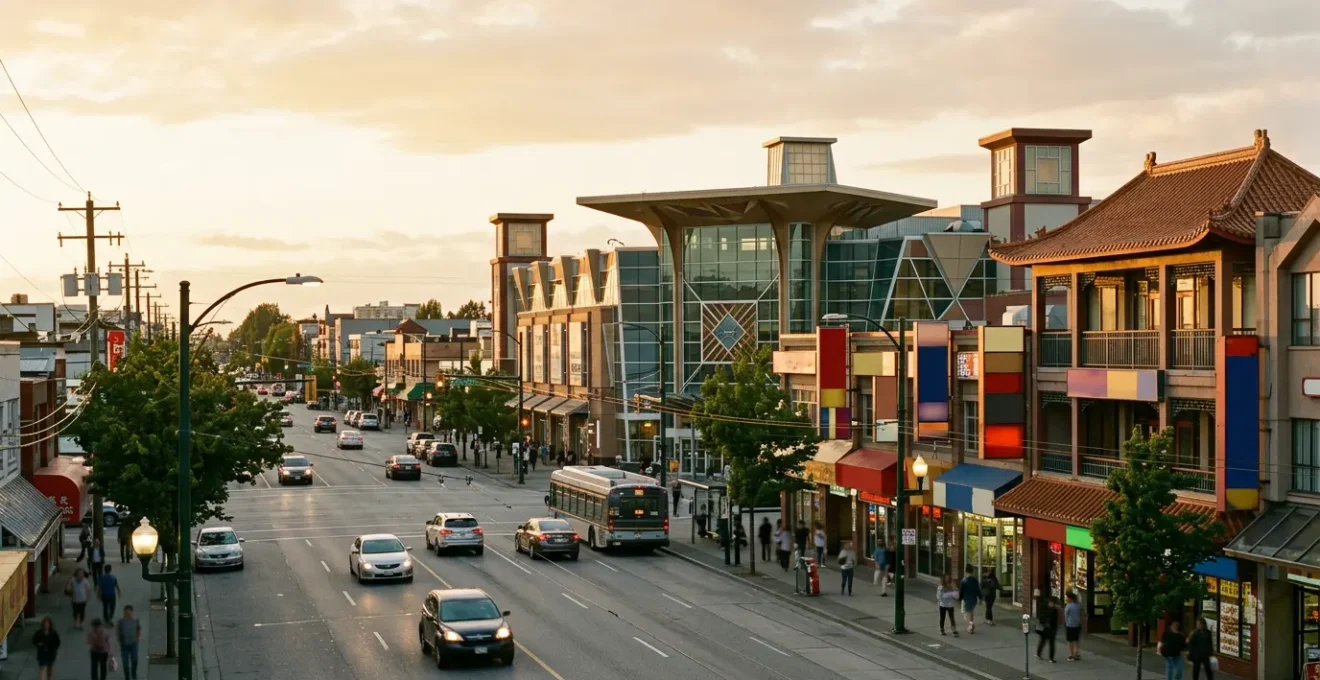
The secret to Richmond’s legendary food scene isn’t just what you eat, but *how* you experience it; it’s an immersive cultural ecosystem, not just a collection of restaurants.
- True enjoyment requires “cultural fluency”—understanding the local rhythm, from navigating chaotic parking lots to knowing which train to board.
- Practical knowledge is key, like bringing cash for the Night Market’s micro-economies or knowing how to order from T&T’s live seafood tanks.
Recommendation: Ditch the downtown mindset for an afternoon and evening. Take the Canada Line south and use this guide to unlock an experience that goes far beyond the dinner plate.
So you’re in downtown Vancouver, you’ve heard the whispers, and you’re asking the question every food-obsessed visitor eventually does: “Should I really take a 20-minute train ride south just to eat?” As a Richmond local, let me be clear: yes, you absolutely should. But the common advice—”the food is authentic,” “there are so many options”—misses the point entirely. Anyone can point you to a good dim sum spot. What they don’t tell you is that Richmond isn’t just a suburb with great restaurants; it’s a self-contained universe with its own rhythm, its own rules, and its own unique language of commerce and culture.
Calling it the “Best Asian Food City” isn’t just about the quality of the noodles or the freshness of the sushi. It’s about the entire ecosystem that supports it. It’s about massive Asian supermarkets that feel more like public aquariums, sprawling Japanese dollar stores with treasures hidden on every shelf, and night markets that operate as bustling micro-economies. To simply show up and eat is to only see the surface. You’d be missing the intricate dance of ordering live crab, the strategic patience required at a four-way stop, or the quiet reverence of a Buddhist temple courtyard just minutes from a chaotic food court.
This isn’t a list of restaurants. This is your guide to achieving cultural fluency in the Golden Village. We’re going to decode the unspoken rules and navigate the logistical quirks that separate a tourist from a traveler. We’ll explore why a car can be both a blessing and a curse, how to master the transit system’s most confusing junction, and what you absolutely must know before you even step foot in our most iconic markets and cultural sites. Forget just finding a good meal; by the end of this, you’ll understand the soul of the city that creates it.
To help you navigate this rich cultural landscape, we’ve broken down the essential insider knowledge you’ll need. This guide covers everything from etiquette and shopping to transportation and mastering the local food scene, ensuring your trip to Richmond is a truly immersive experience.
Summary: A Local’s Guide to Richmond’s Golden Village
- The Shoes-Off Rule: How to Visit the Temple Respectfully?
- Daiso (Oomomo) Haul: What Can You Buy for $3 at the Japanese Dollar Store?
- Garry Point Park: Where to Watch the Sunset Over the Fishing Boats?
- The “Richmond Driver” Stereotype: Is It Dangerous to Drive in the Golden Village?
- T&T Supermarket: How to Navigate the Live Seafood Tanks?
- Waterfront Station Confusion: Which Platform Leads to the Airport?
- Cash or Card: What Do You Need to Survive the Richmond Night Market Lines?
- Canada Line vs Uber: Which Is Faster to Downtown During Rush Hour?
The Shoes-Off Rule: How to Visit the Temple Respectfully?
Before you dive into a single dumpling, your first lesson in Richmond’s cultural fluency begins not in a restaurant, but at the International Buddhist Temple. This magnificent complex, one of the largest and most authentic examples of traditional Chinese palatial architecture in North America, is an oasis of calm. It’s a powerful reminder that Richmond’s identity is built on deep cultural foundations. But visiting requires understanding and respecting a different set of norms. It’s more than just a tourist attraction; it’s a place of active worship and quiet contemplation.
The most fundamental rule is right in the name of this section: shoes come off before entering any of the main halls. You’ll see shelves for your footwear at the entrance, and this simple act of removal is a profound sign of respect. Beyond that, the atmosphere is one of reverence. This isn’t the place for loud conversations or boisterous photo sessions. The goal is to move through the space with a quiet demeanor, absorbing the intricate details of the golden Buddhas and the scent of incense.
The temple is a welcoming place for all, regardless of faith, and according to Tourism Richmond, it is open daily to visitors seeking a moment of peace. Observing the proper etiquette not only shows respect but also allows you to more fully appreciate the serene environment. It’s your first step in understanding the community values that shape the entire Golden Village.
Your Checklist for a Respectful Temple Visit
- Remove shoes before entering any temple building, including the Main Gracious Hall and Thousand Buddha Hall.
- Dress modestly, ensuring shoulders and knees are covered as a sign of respect for the sacred space.
- Maintain a quiet, respectful demeanor and speak softly throughout the temple grounds.
- Refrain from photography or videotaping inside buildings; photos are only permitted in the outdoor courtyards and gardens.
- Do not bring any non-vegetarian food onto the temple premises.
- Use only temple-purchased incense for environmental and safety reasons.
- Donations are welcomed but not required; look for the contribution boxes if you wish to make an offering.
Daiso (Oomomo) Haul: What Can You Buy for $3 at the Japanese Dollar Store?
Once you’ve found your zen, it’s time to embrace another core tenet of Richmond culture: the art of the high-quality bargain. Forget what you know about North American dollar stores. A trip to Oomomo (formerly known as Daiso to many locals) in Aberdeen Centre is a cultural shopping experience. This is where you’ll find everything from cleverly designed travel accessories and beautiful ceramic dishware to quirky Japanese snacks and adorable stationery, with most items priced at just a few dollars.
For a food tourist, this is a treasure trove. You can find authentic, beautifully crafted sake tumblers, fish-motif rice bowls, and cat-shaped soy sauce jugs that will become meaningful souvenirs of your culinary journey—far better than a generic keychain. The sheer variety is part of the fun. It’s about the joy of discovery, of finding a perfectly designed item you never knew you needed for the price of a coffee. This isn’t just shopping; it’s a glimpse into the Japanese appreciation for design, efficiency, and affordable quality.
The store’s layout itself is a lesson in organization, a sharp contrast to the sometimes chaotic energy of other shopping centers. It’s a place to wander, explore, and fill a basket with unique finds.
Case Study: Oomomo’s Role as a Cultural Staple
Since opening in Aberdeen Centre in 2003, Oomomo has become an essential destination for locals and visitors. As Canada’s largest Japanese retail store, it carries over 45,000 types of products, solidifying its role as more than just a shop. Top categories that resonate with the food tourist include Japanese ceramics, decorative chopsticks with matching carry boxes, and unique Japanese candies and canned coffee. The store’s bi-level layout, including a post office on the upper floor, makes it a one-stop hub for both discovering and mailing home unique cultural goods.
To truly appreciate the artistry, take a close look at the craftsmanship on display. The attention to detail in even the most inexpensive items is a hallmark of the experience.
As you can see, the beauty lies in the simplicity and texture of the pieces. A small, well-chosen ceramic bowl can elevate a simple meal and serve as a daily reminder of your trip. This is the essence of the Oomomo haul: finding small, beautiful, and functional items that bring a touch of Japanese design philosophy into your life.
Garry Point Park: Where to Watch the Sunset Over the Fishing Boats?
After a day of exploring temples and shops, the perfect way to connect with the source of Richmond’s culinary fame is to head to the waterfront. Garry Point Park, located in the historic fishing village of Steveston, offers one of the most breathtaking sunset views in the entire Lower Mainland. This isn’t just a pretty view; it’s a direct connection to the city’s fishing heritage and the very boats that supply its “living pantry.” This is where the story of your seafood dinner begins.
The park is a vibrant hub of local life. On any given afternoon, you’ll see multi-generational families picnicking, seniors practicing Tai Chi, and children flying elaborate traditional kites that dance in the sea breeze. The key to the perfect sunset experience is timing. Arrive about 90 minutes before sunset to find a good spot, perhaps after grabbing some classic fish and chips from Pajo’s on the wharf. The best, most unobstructed views of the Fraser River and the returning fishing fleet are found on the benches past the Japanese Canadian memorial.
As the sun dips low, casting a golden hour glow, you’ll witness a magical scene: the silhouettes of fishing boats making their way home against a backdrop of pink and orange skies. It’s a moment of profound peace and a powerful visualization of the connection between the land, the sea, and the plate. This experience frames Richmond’s food scene not just as a commercial enterprise, but as a living tradition tied to the rhythms of the natural world.
The “Richmond Driver” Stereotype: Is It Dangerous to Drive in the Golden Village?
Now for a dose of reality. You may have heard the jokes or seen the online videos about the “Richmond Driver.” Is it a myth? Not entirely. Driving in Richmond, especially around the core shopping area of No. 3 Road, follows a different rhythm. It’s not necessarily more dangerous, but it can be bewildering for the uninitiated. The perceived chaos often stems from a mix of different cultural driving conventions, an abundance of new drivers, and the sheer density of cars navigating complex mall parking lots.
The key is defensive driving and extreme patience. For a visitor, the stress of navigating this unique traffic culture can easily overshadow the joy of exploration. Four-way stops can feel like a game of chicken, with prolonged pauses as drivers negotiate right-of-way. In mall parking lots, expect cars to move at a crawl as they execute systematic grid searches for a prized spot near an entrance. Sudden, last-minute lane changes near mall entrances are common. Your best defense is to increase your following distance, signal your intentions early, and assume nothing.
For most food tourists focused on the central “Golden Village” area, going car-free is not just easier—it’s strategically smarter. Here’s a breakdown of why the Canada Line often wins.
| Factor | Driving | Canada Line + Walking |
|---|---|---|
| Travel Time (from Downtown Vancouver) | 25-40 min (traffic dependent) | 18-22 min (consistent) |
| Parking Availability | Limited at malls, fills quickly on weekends | N/A – stations connect directly to Aberdeen, Lansdowne |
| Cost | Gas + parking fees ($3-8/day) | $4.30 one-way SkyTrain fare |
| Stress Level | High during peak hours and mall rush | Low – no navigation or parking concerns |
| Flexibility | Can visit multiple areas easily | Best for concentrated Golden Village exploration |
| Walkability | Need to drive between malls | Aberdeen, Yaohan, Parker Place all walkable from stations |
| Evening Events | Parking nightmare at Night Market | Direct walk from Bridgeport Station |
T&T Supermarket: How to Navigate the Live Seafood Tanks?
Welcome to the heart of Richmond’s food scene: the Asian supermarket. And T&T Supermarket is the undisputed king. For a first-timer, walking into T&T is a dazzling, and slightly intimidating, experience. It’s loud, it’s crowded, and it’s packed with foods you’ve likely never seen before. Richmond boasts more than 600 restaurants, with over 400 specializing in Asian cuisine, and this is the living pantry that supplies many of their home-kitchen equivalents.
The main attraction, and the ultimate test of your newfound cultural fluency, is the wall of live seafood tanks. Here you’ll find everything from Dungeness crabs and lobsters to spot prawns and the otherworldly geoduck. But how do you go from tank to table? It’s a process with its own specific etiquette. First and foremost, never, ever tap on the glass. The staff take the health of their animals seriously. Instead, observe, decide what you want, and then get the attention of an employee in the seafood department.
A simple point towards the tank is a universal language. The staff will net your selection, weigh it, and ask if you want it prepared. This is a pro-tip for visitors: T&T offers in-store cooking services. You can have your freshly chosen crab steamed with ginger and scallion or your fish deep-fried while you do the rest of your shopping. It’s an incredible way to taste seafood at peak freshness without needing a kitchen.
Your Action Plan for Ordering Fresh Seafood at T&T
- Tank Etiquette: Observe quietly and identify what you want before getting staff attention. Do not tap on the glass.
- Getting Help: Make eye contact with seafood department staff or press the service bell. Pointing at the specific tank and your desired item works perfectly.
- Selection: Staff will net your choice and weigh it. You can ask for their recommendation for the freshest catch.
- Seasonal Timing: For the best experience, aim for Dungeness crab in winter/spring, BC spot prawns in May-June, and geoduck year-round.
- Preparation Options: When ordering, specify if you want the item prepared in-store (e.g., steamed, deep-fried) or if you’re taking it home fresh.
- Pick-up: You’ll receive a number ticket for prepared food, which usually takes 15-20 minutes. You can continue shopping and return to the counter when your number is called.
Waterfront Station Confusion: Which Platform Leads to the Airport?
If you’ve wisely chosen to take the Canada Line, there’s one final piece of navigational nuance you need to master. At Waterfront Station in downtown Vancouver, all trains heading south to Richmond depart from the same platform. This creates a common point of confusion for tourists: one train goes to Richmond’s city centre (Brighouse Station), and the other veers off to the Vancouver International Airport (YVR). Getting on the wrong one is a classic visitor mistake.
The solution is simple but requires a moment of attention. The key is to check the destination display on the front of the arriving train and listen for the automated announcements. It will clearly state either ‘YVR-Airport’ or ‘Richmond-Brighouse’. This confusion is a quirk of the system’s design, where both lines share a single track through Vancouver before splitting at Bridgeport Station in Richmond.
This is a moment to appreciate the contemplative, quiet anticipation of a journey, a universal transit experience that connects cities and people.
Fortunately, there’s a built-in safety net. If you do happen to board the wrong train, don’t panic. You can simply get off at any station up to and including Bridgeport Station and wait on the same platform for the correct train. Bridgeport is the point of divergence, so it’s your last chance to switch. Mastering this small detail is the final step in becoming a confident transit user between Vancouver and the Golden Village.
Foolproof Canada Line Navigation in 3 Steps
- Check the Front Sign: Look at the LED destination display on the front of the arriving train. It will say either ‘YVR-Airport’ or ‘Richmond-Brighouse’.
- Listen to Announcements: The automated voice will clearly announce the train’s final destination.
- Use the Bridgeport Safety Net: If you board the wrong train, you can transfer at any station up to and including Bridgeport Station, where the routes diverge.
Key Takeaways
- Richmond’s “Golden Village” is an immersive cultural ecosystem, not just a food destination.
- Navigating Richmond successfully requires “cultural fluency”—understanding local rhythms in transport, shopping, and dining.
- Practical preparations, like carrying cash for the Night Market and knowing how to use the Canada Line, are essential for a stress-free experience.
Cash or Card: What Do You Need to Survive the Richmond Night Market Lines?
No trip to Richmond during the summer is complete without a visit to the Richmond Night Market. It’s a dazzling spectacle of flashing lights, live entertainment, and, most importantly, hundreds of food stalls serving up everything from spiral potatoes to grilled squid. The Richmond Night Market attracts over 1 million visitors annually, making it the largest of its kind in North America, and that sheer volume means you need a strategy.
Your most critical piece of preparation has to do with your wallet. While you can pay for admission with a card, the vast majority of the 200+ food and retail vendors are cash only. This isn’t just a quirk; it’s a reflection of the market’s role as a launchpad for micro-entrepreneurs. By using cash, they avoid high processing fees, keeping prices low and supporting a vibrant, grassroots business culture. Relying on the on-site ATMs is a rookie mistake; the lines are notoriously long, and the fees are high.
The local pro-move is the “Two-Wallet System.” Your main wallet with ID and cards stays securely tucked away. You then carry a second, smaller “food wallet” or pouch with small bills ($5s and $10s) for quick, easy transactions at the food stalls. Budget around $30-50 in cash per person for a satisfying evening of grazing. This simple strategy saves you time, protects you from loss or theft in the dense crowds, and lets you move with the fluid rhythm of the market, not against it.
Canada Line vs Uber: Which Is Faster to Downtown During Rush Hour?
At the end of your Richmond adventure, you have one last logistical puzzle: getting back to downtown Vancouver. During rush hour, the choice between the Canada Line and a rideshare service like Uber isn’t just about cost—it’s about time and sanity. While Uber offers door-to-door convenience, it is completely at the mercy of the infamous traffic on Highway 99 and the Oak Street Bridge. A trip that takes 25 minutes off-peak can easily stretch to 50 minutes or more in heavy congestion.
The Canada Line, on the other hand, operates on its own dedicated track, completely immune to road traffic. Its travel time is a consistent 18-22 minutes from Richmond-Brighouse Station to Vancouver City Centre, regardless of the time of day. For a solo traveler or a couple during peak hours (7-9am and 4-7pm), the train is almost always the faster, cheaper, and less stressful option. The only trade-off is the potential for crowded cars and the need to walk from the station to your final destination.
For a clear picture, this comparison of a trip from Richmond’s city centre to downtown Vancouver tells the whole story, with the data sourced from a transit analysis by Tourism Richmond.
| Factor | Canada Line SkyTrain | Uber/Lyft |
|---|---|---|
| Speed (Richmond-Brighouse to Vancouver City Centre) | 18-22 minutes (consistent) | 25-50 minutes (highly variable) |
| Rush Hour Performance (7-9am, 4-7pm) | Unaffected – dedicated track | Severely impacted by Highway 99 congestion |
| Cost (per person) | $4.30 one-way | $35-55 CAD (surge pricing peaks at $60+) |
| Environmental Impact | Low – electric rapid transit | Higher – single occupancy vehicle |
| Reliability | Trains every 3-6 minutes, fixed schedule | Variable wait times, especially during peak demand |
| Stress Factor | Crowded trains during peak, standing room only | Traffic anxiety, unpredictable arrival time |
| Last Mile Solution | Requires walking/connection from station to final destination | Door-to-door service |
For those who need more flexibility, locals often use a hybrid strategy. This might involve driving to a station with ample parking like Bridgeport, then taking the train the rest of the way, or using an Uber only for the “last mile” from a station to a specific, hard-to-reach destination. Ultimately, making the right choice is your final exam in Richmond cultural fluency.
By embracing these local insights, you’re ready to experience the Golden Village not as an outsider, but as an informed guest. Your journey starts now—the next train to Richmond-Brighouse is just minutes away.