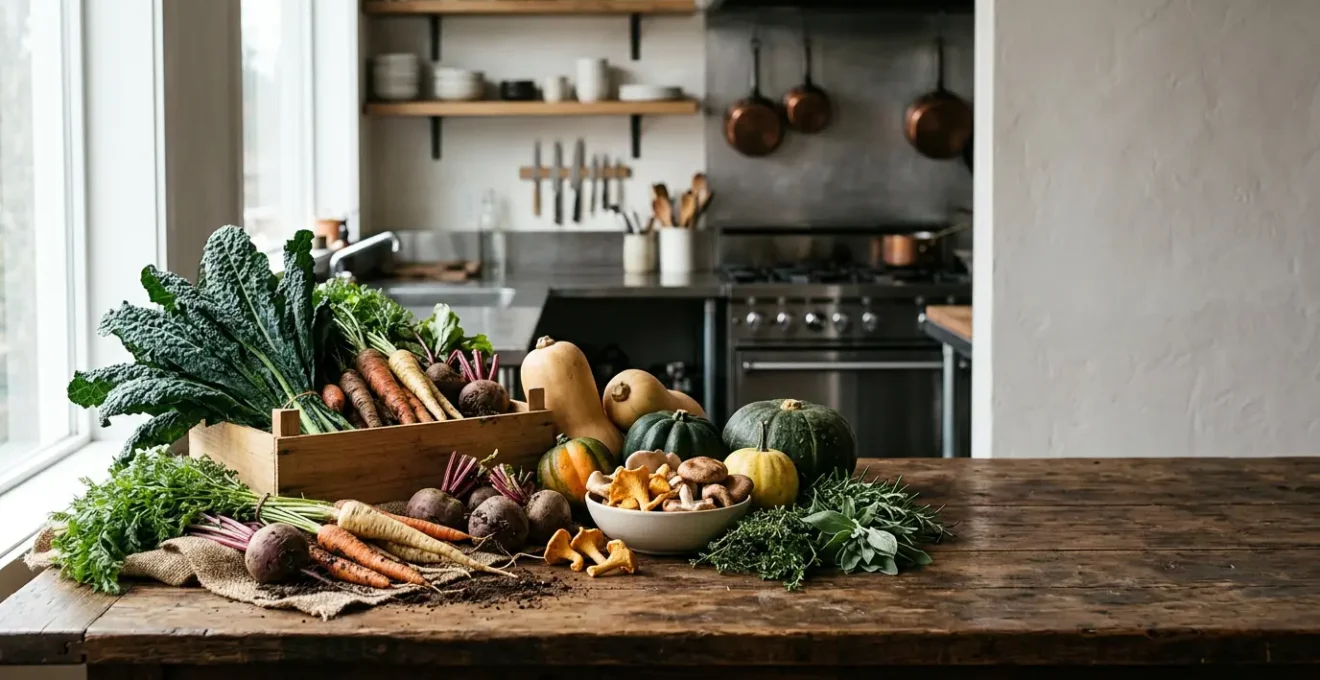
“Local food” in a Vancouver winter isn’t a myth, but it’s a calculated system of hyperlocal innovation, strategic preservation, and a flexible definition of “local” that’s more complex than you think.
- True “local” dining in winter means embracing a flexible radius that includes the Fraser Valley and Okanagan, combined with advanced preservation techniques that capture summer’s bounty.
- Pioneering urban farms like Sole Food are production powerhouses, growing tons of fresh food on repurposed city land, supplying top restaurants directly.
Recommendation: Instead of asking *if* an ingredient is local, ask *how* it’s local. Inquire about the farm, the preservation method, or the story behind the ingredient to truly understand the journey to your plate.
A crisp January evening in Vancouver, and the menu at a celebrated restaurant proudly proclaims “locally sourced ingredients.” A skeptical diner might pause. Local? In the dead of winter? Visions of rain-swept, empty fields come to mind. The common assumption is that winter dining means a monotonous diet of potatoes and turnips, or that “local” is just a marketing term for ingredients bought from a warehouse “nearby.” Many believe the only way to get variety is through summer preservation—a simple act of canning and pickling.
But what if the reality is far more intricate and fascinating? The truth behind Vancouver’s vibrant winter farm-to-table scene isn’t about surviving on root vegetables. It’s a story of a complex, resilient food ecosystem built on three pillars: a pragmatic, expanded definition of “local,” the scientific art of preservation that goes far beyond simple pickling, and radical innovation in hyperlocal urban agriculture happening right under our noses. This isn’t just about food; it’s about food system economics, land use, and community resilience.
This guide peels back the layers of that “local” label. We will explore the geographical and philosophical boundaries of “local,” visit the city’s most innovative urban farms, compare the winter markets, and even break down the economics of why a perfect summer tomato has a right to be expensive. Prepare to have your skepticism satisfied and your appreciation for that winter dish deepened.
To navigate this complex culinary landscape, this article breaks down the key components of Vancouver’s winter food scene. The following summary outlines how we’ll explore everything from the definition of “local” to the groundbreaking green infrastructure shaping the city’s sustainable identity.
Summary: Farm to Table in Winter: How Do Vancouver Restaurants Source Local Ingredients in January?
- The “Local” Trap: Does “Local” Mean BC or Just “Bought Nearby”?
- Sole Food Street Farms: Can You Visit the Gardens in Downtown Eastside?
- Riley Park or Kitsilano: Which Farmers Market Has the Best Food Trucks?
- The Acorn vs Heirloom: Which Vegetarian Restaurant Impresses Meat Eaters?
- Why Does a Tomato Salad Cost $24 in August?
- Platinum vs Gold: What Do LEED Ratings Mean for Vancouver Hotels?
- Chanterelle vs Pine Mushroom: What to Look for at Fall Farmers Markets?
- Why Is the Vancouver Convention Centre Roof Covered in 6 Acres of Grass?
The “Local” Trap: Does “Local” Mean BC or Just “Bought Nearby”?
The term “local” is the most used and abused word on modern menus. For a skeptical diner, it triggers immediate questions. Does it mean grown within city limits? In the Fraser Valley? Anywhere in British Columbia? The ambiguity can feel deceptive, but for chefs dedicated to seasonal cooking, “local” is a pragmatic and flexible concept. The modern local food movement in Vancouver was arguably defined when authors Alisa Smith and J.B. MacKinnon committed to an experiment: for one year, they would only consume food that came from within a 100-mile radius of their Vancouver apartment. This concept, The 100-Mile Diet, set a benchmark that many still aspire to.
In the harsh reality of a Canadian winter, however, a strict 100-mile radius can be limiting. Therefore, many chefs adopt a two-pronged strategy: hyperlocal sourcing for what’s possible and regional sourcing for the rest. Hyperlocal might mean herbs from a restaurant’s own rooftop garden or winter greens from an urban farm in Vancouver. Regionally, it means embracing the agricultural bounty of places like the Fraser Valley and the Okanagan. A winter squash from Cawston, BC, is still profoundly more “local” in terms of food miles and supporting the provincial economy than one trucked in from California or Mexico.
Case Study: Forage Restaurant’s Transparent Winter Sourcing Model
Forage restaurant exemplifies this pragmatic approach to winter sourcing. Their menu is a living document, changing weekly based on what’s available from their network of dedicated suppliers. As detailed in an analysis of Vancouver’s farm-to-table winter strategies, Chef Craig Sung masterfully coordinates this supply chain. He sources Brussels sprouts and butter potatoes from North Arm Farm in Pemberton, gets beets, squash, and apples from Klippers Organics in Cawston, and relies on Hannah Brook Farms in Burnaby for unique items like stinging nettle and celery root. Crucially, the winter menu is also a showcase of their “preservation science”—using pickling, fermenting, and preserving techniques to carry the flavours of spring and summer into the darker months, transforming what could be a limitation into a culinary strength.
Your Skeptic’s Checklist: How to Vet “Local” Claims
- Ask “Which farm?”: A chef who truly sources locally will know the name of the farm. “I’m not sure” is a red flag. “It’s from Klippers Organics” is a green light.
- Inquire about seasonality: If you see fresh asparagus on a menu in January, ask about it. The honest answer might be “It’s from Peru, but our fish is from the Sunshine Coast.” This transparency is key.
- Look for preservation clues: Words like “pickled,” “fermented,” “jam,” or “compote” in winter are signs of a chef who planned ahead and respects the seasons.
- Check the supplier list: Many genuinely local-focused restaurants proudly list their farm partners on their menu or website. It’s a mark of honour.
- Vote with your wallet: Support the restaurants that answer your questions with passion and transparency. They are the true champions of the local food system.
Sole Food Street Farms: Can You Visit the Gardens in Downtown Eastside?
When you think of a farm, you probably don’t picture the intersection of Main and Terminal. Yet, this is the heart of Vancouver’s urban agriculture revolution. Sole Food Street Farms operates several sites, including a prominent one near the Downtown Eastside, and it shatters the traditional image of farming. This isn’t a quaint community garden; it’s a high-production social enterprise. As one of North America’s largest urban farms, it produces an astonishing 30 tons of fresh food each year, supplying dozens of top Vancouver restaurants and local farmers’ markets.
The genius of Sole Food lies in its solution to Vancouver’s biggest barriers: high land values and potential soil contamination. Instead of farming in the ground, they grow produce in thousands of specially designed boxes set on shipping pallets. This container-based system allows them to operate on paved lots and move the entire farm with forklifts if they lose access to a piece of land. This innovation results in a yield 15-25 times higher than conventional field planting for the same area. In winter, these boxes are filled with hardy crops like kale, chard, winter lettuces, and root vegetables that thrive in Vancouver’s mild, wet climate.
This paragraph introduces the concept of urban farming with winter vegetables. To better understand this, it is helpful to visualize the setup. The image below shows exactly that.
As you can see, the raised beds allow for controlled soil conditions, essential in an urban environment. This method ensures that even in the heart of the city, high-quality, fresh produce can be grown year-round. While the farms are working agricultural sites and not generally open for public tours due to operational demands, their presence is highly visible. You can see the gardens from the street or SkyTrain, and more importantly, you can support them by buying their produce at farmers’ markets or dining at one of the many restaurants they supply.
Riley Park or Kitsilano: Which Farmers Market Has the Best Food Trucks?
For the skeptical diner looking for direct proof of winter’s bounty, the farmers’ market is ground zero. While many summer markets close, Vancouver keeps the connection between farmer and citizen alive through the colder months. The main hub for this activity is the Riley Park Winter Farmers Market. Held every Saturday in the parking lot of Nat Bailey Stadium, it’s a vibrant, bustling scene, proving that local food doesn’t go into hibernation. Rain or shine, Vancouver’s largest winter market features over 85+ local farms and food producers, making it an essential weekend destination for chefs and home cooks alike.
Here you’ll find the true heroes of winter: pyramids of colourful squash, muddy bunches of carrots and beets, hearty winter greens like kale and collards, and tables laden with apples, pears, and preserves. It’s a direct contradiction to the idea that nothing grows. You’ll also find ranchers with frozen local meats, artisan bakers, and cheesemakers. For years, Riley Park was the primary option after the Hastings Park winter market ceased operations. However, the scene has expanded. Recognizing the demand, the Kitsilano Farmers Market now also runs a winter edition, offering West Side residents a fantastic local option.
So, which is “better”? Riley Park is larger, with more vendors and a more extensive selection, giving it the feel of a central food hub. The food truck scene there is also more established and varied. Kitsilano is smaller, more intimate, and perhaps easier to navigate for a quick trip. The best one is the one you’ll actually go to. The crucial point is that they both exist, providing robust, delicious proof that you can eat locally and seasonally all winter long. The “best” choice often comes down to convenience and personal preference, but both offer an incredible selection of what BC has to offer.
The Acorn vs Heirloom: Which Vegetarian Restaurant Impresses Meat Eaters?
Perhaps the ultimate test of a chef’s mastery over local, seasonal ingredients is their ability to make vegetables the undeniable star of the show. In Vancouver, two restaurants consistently come up in the conversation about plant-based fine dining that can win over even the most ardent carnivore: The Acorn and Heirloom. The question isn’t just about which is better, but how their philosophies showcase the potential of winter produce. They prove that a meal without meat is not a meal with a “hole” in it, but rather an opportunity for creativity.
The Acorn, located on Main Street, is often lauded for its artistry and complex flavour profiles. It’s the kind of place that earns international acclaim and Michelin recommendations. A meal here is a journey, with dishes that are intricately composed and visually stunning. They excel at transforming humble ingredients—like celery root or sunchoke—into something transcendent through techniques like smoking, fermenting, and dehydrating. The Acorn is where you take someone to prove that vegetables can be as complex and satisfying as any protein.
This is where the chef’s skill is paramount, turning simple ingredients into a work of art. The image below shows the care that goes into each plate.
Heirloom, with its airy, beautiful space in South Granville, offers a more approachable but equally delicious take. Its menu is larger and includes brunch, lunch, and dinner, with dishes that feel both wholesome and indulgent. While they also create beautiful plates, the focus is perhaps more on clean, bright flavours that let the quality of the ingredient shine through. You might find a hearty winter squash dish or a creative root vegetable salad that is both comforting and surprising. So, which one will impress a meat-eater? For the adventurous foodie who appreciates culinary artistry, The Acorn is a mind-opening experience. For someone who wants a delicious, beautiful, and satisfying meal that just happens to be vegetarian, Heirloom is a guaranteed win. Both are exceptional showcases of what local farming has to offer.
Why Does a Tomato Salad Cost $24 in August?
While this article focuses on winter, the answer to this summer question reveals the fundamental economics of the local food system that impact prices year-round. When a diner sees a $24 tomato salad on a menu, even in peak season, it can cause sticker shock. The skeptical reaction is often, “It’s just tomatoes!” But that price isn’t just for the raw ingredient; it’s a reflection of the entire value chain of small-scale, sustainable agriculture in a region with immense economic pressures.
First, consider the land. That tomato was likely grown on a small farm in a place like the Fraser Valley, where land value is among the highest in North America. The pressure to sell farmland for housing or industrial development is enormous. A farmer choosing to grow heirloom tomatoes instead of selling to a developer is making a conscious, and often less lucrative, economic choice. They need to charge a price that allows them to continue farming on that valuable land.
Second, there are the labour and inputs. Unlike industrial tomatoes bred for shipping and long shelf life, heirloom tomatoes are delicate, require careful hand-harvesting, and have a shorter shelf life. The farmer is selecting for flavour, not durability. This requires more skilled labour and results in more potential loss. Finally, the chef at a farm-to-table restaurant has a direct relationship with that farmer. They pay a fair price that honours the farmer’s work, which is significantly higher than the commodity price of a mass-produced tomato from a massive industrial farm. The $24 price tag includes the land cost, the skilled labour, the risk, the chef’s artistry, and the restaurant’s overhead. As J.B. MacKinnon, co-author of *The 100-Mile Diet*, poignantly noted in a later interview, the system is squeezed from all sides.
One thing that happened is that demand for local food surged, but a series of governments have refused to strengthen and support the supply side. You know, we’re eating up farmland to build condos rather than tearing down condos to expand farmland.
– J.B. MacKinnon, The Tyee Interview – The 100-Mile Diet, 15 Years Later
In essence, you are not just paying for a tomato. You are paying for the continued existence of local farms and a more resilient, flavourful food system. It’s a vote for a different set of values than the one that prioritizes cheap, tasteless food shipped from thousands of kilometres away.
Platinum vs Gold: What Do LEED Ratings Mean for Vancouver Hotels?
The commitment to local and sustainable thinking in Vancouver extends far beyond the plate. It’s woven into the very fabric of the city’s buildings, especially in the hospitality sector. When a hotel advertises a LEED rating, it’s making a verifiable claim about its environmental performance, much like a chef claiming to source locally. LEED, or Leadership in Energy and Environmental Design, is a globally recognized green building certification system. For a traveler, choosing a LEED-certified hotel is a way to support sustainability, but what does it really mean?
The ratings—Certified, Silver, Gold, and Platinum—are awarded based on a point system across several categories, including water efficiency, energy use, materials, and indoor environmental quality. A LEED Gold hotel has made significant efforts. This could mean installing high-efficiency lighting and plumbing, using recycled materials in construction, and implementing robust recycling programs. It’s a strong, commendable standard of sustainability.
A LEED Platinum hotel, however, is in a class of its own. It represents the highest level of achievement in green building. To reach Platinum, a hotel must go above and beyond, integrating cutting-edge technologies and holistic design. This might include features like a green roof to manage stormwater and improve insulation (like the Vancouver Convention Centre’s), a rainwater harvesting system to reduce municipal water use, or an advanced HVAC system that provides superior air quality while minimizing energy consumption. For a skeptical guest, the LEED plaque is a third-party-verified guarantee that the hotel’s green claims are not just “greenwashing.” Choosing a Gold hotel is a good choice; choosing a Platinum one is a statement that supports the pinnacle of sustainable design.
Chanterelle vs Pine Mushroom: What to Look for at Fall Farmers Markets?
The title of this section presents a classic seasonal puzzle for a Vancouver foodie. The question itself is a bit of a trick, as it mixes seasons. Chanterelle mushrooms are the undisputed golden darlings of the fall. From late August through October, a walk through any Vancouver farmers’ market will find them piled in fragrant, apricot-scented mounds. They are a true signifier of the autumn harvest, foraged from the damp, mossy floors of BC’s coastal forests.
Pine mushrooms, or Matsutake, are the other superstar of the fall foraging season. Highly prized, particularly in Japanese cuisine, these dense, spicy-smelling mushrooms have a much shorter and more elusive season. Finding them at a market is a special occasion, and their powerful aroma is unmistakable. They represent the peak of the fall foraging experience, a fleeting treasure before the winter rains truly set in.
So, what does this have to do with eating locally in January? It highlights the importance of deep seasonality. By the time winter markets like Riley Park are in full swing, the season for fresh, wild chanterelles and pines is over. Instead of looking for them, the savvy local eater’s focus should shift. You might find them preserved—dried, pickled, or powdered—by enterprising vendors. This is where their flavour is captured for the winter. The fresh mushroom focus in winter shifts to cultivated varieties from local growers like an Oyster or Lion’s Mane mushroom, which can be grown indoors year-round. Thus, the answer to “Chanterelle vs. Pine” in winter is “neither.” The real answer is to embrace what the current season offers: delicious cultivated mushrooms and the preserved treasures of the fall.
Key takeaways
- Winter “farm-to-table” in Vancouver is a real and vibrant system, but it relies on a flexible definition of “local,” advanced preservation, and innovative urban farming.
- Organizations like Sole Food Street Farms are critical infrastructure, using innovative container-based methods to grow tons of fresh produce on urban land.
- The price of truly local food reflects the real costs of sustainable farming in a high-cost region, including fair pay for farmers and pressure on agricultural land.
Why Is the Vancouver Convention Centre Roof Covered in 6 Acres of Grass?
The iconic living roof of the Vancouver Convention Centre’s West building is more than just a beautiful, grassy slope. It’s the most visible and largest-scale example of the city’s commitment to integrated, sustainable design. For the skeptical observer, it might look like an aesthetic choice, but that six-acre expanse is a hardworking ecosystem that directly addresses some of Vancouver’s most pressing environmental challenges and connects, in a surprising way, to the local food system.
First and foremost, the roof is a massive stormwater management system. In a city famous for its rainfall, managing runoff from huge impervious surfaces is a major challenge. The roof’s soil and 400,000 native plants absorb and filter a huge amount of rainwater, reducing the strain on the city’s storm sewers and improving the water quality of the surrounding Burrard Inlet. Second, it acts as a natural insulator. The layers of soil and vegetation keep the building cooler in the summer and warmer in the winter, significantly reducing the energy required for heating and cooling the vast space below. This is a core principle of green building, seen in LEED-certified hotels and residential buildings across the city.
Most fascinatingly, the roof is a habitat. It was designed to mimic a coastal grassland ecosystem and is home to four beehives. These bees are not just a novelty; they are crucial pollinators. They forage on the roof’s flowers and in nearby Stanley Park, and the honey they produce is used in the Convention Centre’s own kitchens—a perfect example of hyperlocal sourcing. That living roof is not “grass”; it’s a piece of functioning green infrastructure that insulates, cleans water, and supports the very pollinators that the region’s food systems depend on. It’s the philosophy of farm-to-table applied on an architectural scale.
Ultimately, eating locally in Vancouver during the winter is not just possible; it’s a rich and rewarding experience. It requires a curious and engaged diner, one willing to look past the simple label and understand the complex and passionate system that brings food from the farm—whether it’s in the Okanagan, a paved lot downtown, or on a rooftop—to the table. By asking the right questions and supporting the chefs, farmers, and markets who champion this cause, you become an active participant in a more sustainable and delicious food future.