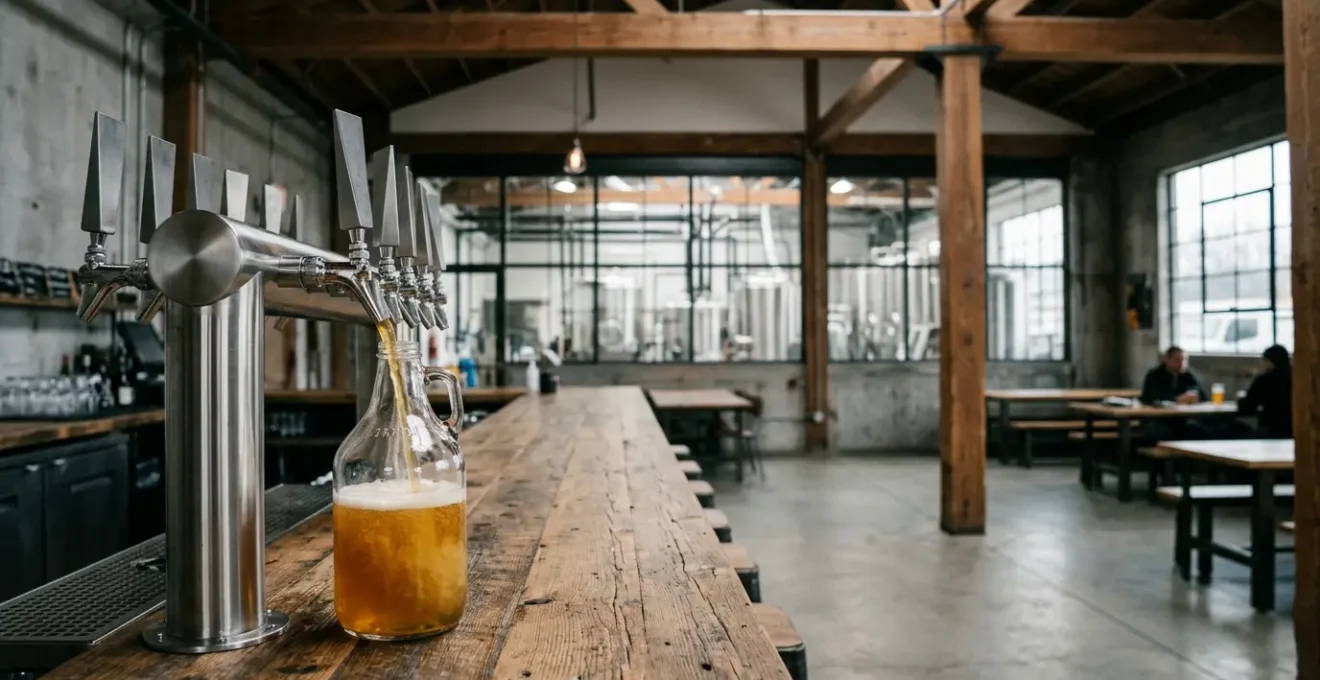
Getting fresh craft beer to-go in East Vancouver is more than a purchase; it’s about understanding a unique local ecosystem of licensing laws, transportation logistics, and cultural norms.
- Brewery food options are dictated by specific BC liquor licenses, creating a vibrant, but unpredictable, food truck scene.
- The city’s cycling infrastructure, like the Adanac Bikeway, is the preferred way to tour breweries, but requires proper gear for transporting beer safely.
Recommendation: Plan your brewery tour not just by beer style, but by considering the interplay of food availability, transit routes, and family-friendliness for a seamless experience.
So, you’re in Vancouver and you have a noble goal: to bring fresh, tap-drawn craft beer back to your sanctuary. You’ve heard the whispers of “Yeast Van,” a mythical-sounding industrial zone teeming with world-class breweries. You envision a simple transaction: walk in, fill a growler, walk out. But here’s the secret from behind the mash tun: acquiring beer to-go in East Van isn’t just a purchase, it’s an immersion into a complex and fascinating local ecosystem. It’s a world shaped by unique licensing laws, a die-hard cycling culture, and a collective obsession with a particular style of beer.
Many guides will give you a list of breweries. This isn’t that guide. We won’t just tell you *what* to do; we’ll explain the *why*. Why do some breweries have full kitchens while others rely on a rotating taco truck? Why is that hazy IPA so popular, and what does it mean from a technical brewing standpoint? The key to a successful beer run in East Van isn’t just knowing the brewery addresses. It’s about achieving “ecosystem literacy”—understanding the interplay between the liquid in your glass and the logistics on the street. This guide will take you from being a simple beer tourist to a savvy navigator of the Yeast Van scene, ensuring your growler is not only full of great beer, but your journey to get it is smooth, efficient, and part of the authentic Vancouver experience.
This article decodes the unwritten rules and practical logistics of the East Van craft beer scene. We’ll explore everything from family-friendly policies and food options to the best way to transport your precious cargo by bike, giving you the insider knowledge to navigate Yeast Van like a pro.
Summary: East Van Growler Fills: A Brewmaster’s Guide to Buying Fresh Craft Beer to Go
- Family-Friendly Breweries: Where Can You Bring Kids in East Van?
- The Juice Bomb: Why Is Vancouver Obsessed with Hazy IPAs?
- Food Truck or Kitchen: Which Breweries Have Full Dinner Menus?
- The Adanac Bikeway: How to Cycle Between Breweries Safely?
- The Can Release Lineup: Is It Worth Waiting for a 4-Pack of Stout?
- Why Does the Craft Beer Market Building Have No Insulation?
- Balance Protection: Why Should You Register Your Compass Card Online?
- Where to Find Live Music in Vancouver That Isn’t Top 40 Covers?
Family-Friendly Breweries: Where Can You Bring Kids in East Van?
One of the first logistical hurdles for many visitors is the question of kids. Is a brewery a place for children? In East Van, the answer is often a resounding “yes,” but with conditions. The culture is built around community, and that includes families. However, success depends on understanding the unwritten rules. These aren’t bars; they are production facilities with tasting rooms, and timing is everything. The “golden hours” are typically early weekend afternoons, between 12 PM and 3 PM, when the atmosphere is relaxed and family-oriented. Conversely, the after-work rush on a Friday or a Saturday night post-8 PM are effective no-go zones for those with little ones in tow.
True family-friendliness goes beyond simply allowing entry. The best spots offer more than just water as a non-alcoholic option; look for breweries offering house-made sodas, kombucha, or ginger beer. The physical space is also critical. On a rare sunny Vancouver day, a patio like Container Brewing’s is ideal. For the more common rainy days, a warehouse-style brewery with ample indoor stroller space is a must. Many breweries, understanding their clientele, have equipped themselves accordingly.
Case Study: Strange Fellows Brewing, The Board Game Haven
Strange Fellows Brewing on Clark Drive is a perfect example of the family-friendly model. It has become a go-to anchor for families brewery-hopping in the area. Their secret weapon isn’t just their excellent Belgian-inspired ales, but a well-curated collection of vintage board games. This simple offering provides a crucial engagement point for children, allowing parents the time to actually taste and enjoy their beer flight. The brewery’s design, with its old-world curiosities, adds a layer of interest, turning a tasting room visit into a low-key cultural outing for all ages.
Before you go, a quick phone call to confirm high chair availability is always a smart move. Planning a family brewery visit is entirely possible and enjoyable—it just requires a bit of strategic thinking that aligns with the local rhythm.
The Juice Bomb: Why Is Vancouver Obsessed with Hazy IPAs?
As you peruse the tap lists, you’ll notice a distinct pattern: a heavy-leaning towards Hazy IPAs, often called NEIPAs (New England IPAs) or “Juice Bombs.” This isn’t an accident; it’s a full-blown regional obsession. From a brewmaster’s perspective, this style is both a technical challenge and a sensory reward. Unlike the clear, bitter West Coast IPAs of the past, Hazy IPAs are intentionally opaque, with a soft, pillowy mouthfeel and an explosive aroma of tropical and citrus fruits. This is achieved through specific techniques: using high-protein grains like oats and wheat for body, a special yeast strain that remains in suspension, and a massive dose of “dry hops” added late in the fermentation process. This “biotransformation” of hop oils by the yeast is what creates the intense, juicy flavours of mango, passionfruit, and guava without overwhelming bitterness.
The style’s popularity is a reflection of a broader shift in consumer palates towards flavour and aroma over pure bitterness. It’s an accessible yet complex style that appeals to both seasoned craft drinkers and newcomers. The scene’s growth has been explosive; as a Wikipedia entry on Canadian beer notes, the number of small breweries in BC more than doubled from 54 in 2010 to 118 by 2015, and that expansion was fertile ground for new trends like the Hazy IPA to take root. Today, with nearly 240 breweries operating in BC as of 2025, a brewery’s take on the Hazy IPA has become a signature offering, a benchmark by which they are often judged.
So, when you see a Hazy IPA on the menu, know that you’re not just ordering a beer. You’re tasting a specific, deliberate brewing philosophy that has come to define the modern Vancouver craft beer identity. It’s a style that prioritizes aromatic intensity and textural softness, a true “juice bomb” in a glass.
Food Truck or Kitchen: Which Breweries Have Full Dinner Menus?
After a flight of beer, the next question is inevitable: “What’s for dinner?” In East Van, the answer is more complicated than you’d think, and it all comes down to British Columbia’s liquor licensing. You’ll notice two distinct types of breweries: those with full, integrated restaurant kitchens (like a classic brew pub), and those with a seemingly random, but often delicious, food truck parked out front. This isn’t a stylistic choice; it’s a business decision driven by licensing tiers. To operate a full kitchen with an unrestricted menu and the ability to serve other companies’ alcohol, a brewery needs a “Liquor Primary License,” which comes with a hefty annual fee and significant overhead.
Many smaller craft breweries opt for a “Manufacturer License” with a “Lounge Endorsement.” This allows them to serve their own beer by the glass but comes with strict rules, including a requirement to offer food. The most cost-effective way to meet this requirement without the expense of a full kitchen is to partner with independent food trucks. This creates the nomadic, symbiotic relationship you see all over East Van.
This detailed table, based on information from hospitality advisors, breaks down the core differences in licenses that dictate a brewery’s food service capabilities.
| License Type | Food Service Allowed | Alcohol Service | Annual Fee (CAD) | 80/20 Rule |
|---|---|---|---|---|
| Manufacturer License Only | No food service required; packaged snacks permitted | Samples in dedicated tasting area | $550 (brewery) | N/A |
| Manufacturer + Lounge Endorsement | Must serve food | By glass/bottle; min. 80% own products | $550 + $330 = $880 | Yes – 80% sales must be own products |
| Liquor Primary License (Brew Pub) | Full restaurant service | All types of alcohol; no 80/20 restriction | $4,400 | No |
| Manufacturer + Liquor Primary | Full restaurant capability | Unrestricted alcohol selection | $550 + $4,400 = $4,950 | No |
Case Study: The Nomadic Food Truck Partnership
This model allows breweries to focus on what they do best—brewing beer—while providing excellent food options. The pairings are often curated, like a Latin-inspired truck’s ceviche complementing Andina Brewing’s South American-style beers. The catch for you, the visitor, is the unpredictability. Food truck schedules can change, so the most reliable source of information is not the brewery’s website, but their daily Instagram story or a dedicated app like Street Food App. Checking this in real-time is a crucial step in planning your visit if a meal is a priority.
The Adanac Bikeway: How to Cycle Between Breweries Safely?
If you want to move around East Van like a local, forget the car. The preferred method of transport, and the backbone of the “Yeast Van” brewery crawl, is the bicycle. The Adanac Bikeway is the main artery, a protected bike lane that runs east-west, connecting many of the key brewery clusters in the False Creek Flats area. It offers a safe and efficient way to hop between tasting rooms, but transporting your precious cargo of fresh beer requires some specific knowledge and gear.
First, let’s talk about the law. While you can’t be charged with a DUI on a conventional bicycle, according to BC legal frameworks, cyclists can be charged under the Liquor Control and Licensing Act for public intoxication if their ability to ride is impaired. The key is moderation and responsible consumption. The “one brewery per stop” harm-reduction strategy is a wise approach. Secondly, the container matters. Glass growlers are heavy, fragile, and prone to losing carbonation. The superior choice for cyclists is the crowler: a 32oz (946ml) can filled and sealed to order. It’s lighter, unbreakable, and preserves the beer’s quality perfectly. Finally, safe transport is crucial. Never put a growler in a backpack; it creates a high, unstable center of gravity. The best method is to use rear pannier bags, distributing the weight evenly and keeping it low and secure.
Your Action Plan: Safely Carrying Beer by Bike
- Choose crowler cans over glass growlers for cycling—they’re lighter, unbreakable, and offer better carbonation retention.
- Use pannier bags with padded inserts designed for bottles to keep the center of gravity low.
- Secure growlers and crowlers upright in rear panniers, never in a backpack where they can shift your weight dangerously.
- For multiple 4-packs, distribute the weight evenly between both panniers to maintain balance.
- Practice a ‘one-and-done’ sampling strategy at each stop to ensure you maintain safe cycling ability.
- Check bike rack availability beforehand; breweries like Strange Fellows and Parallel 49 have ample parking, but smaller spots may not.
- Avoid the heavy industrial traffic on routes like Clark Drive during the weekday rush hour (4-6 PM).
The Can Release Lineup: Is It Worth Waiting for a 4-Pack of Stout?
On a Saturday morning in East Vancouver, you might witness a curious sight: a lineup of people outside a brewery, hours before it opens. This is the “can release,” a cultural ritual for the most dedicated craft beer fans. These events are for limited-edition, often high-alcohol beers like barrel-aged stouts or triple IPAs, packaged in 4-packs of tall cans. The question for a visitor is: is it worth your precious vacation time to join this queue?
The answer depends on your goals. If you are a collector or a “ticker” chasing rare beers for your Untappd profile, then yes, this is the pinnacle of the Vancouver craft experience. It’s a social event, a chance to chat with fellow beer lovers and the brewers themselves. The atmosphere is one of communal anticipation. However, if your goal is simply to drink good, fresh beer, the lineup is almost certainly not worth it. Every brewery in East Van has a fantastic selection of core beers and seasonal offerings available for growler and crowler fills, no waiting required.
The premium pricing on these limited releases also tells an important economic story. As recent industry profitability data shows, only 37% of craft breweries in Canada are profitable. The high margins on these sought-after cans are a crucial part of a small brewery’s business model, helping to subsidize the lower margins on their year-round beers. By participating, you are directly supporting the brewery’s creative and financial health. For the casual visitor, appreciating this dynamic is more important than being in the lineup. Skip the wait, buy a crowler of their excellent flagship IPA, and know you’re still supporting the local scene.
Why Does the Craft Beer Market Building Have No Insulation?
If you visit the massive Craft Beer Market in the historic Salt Building near Olympic Village, you might notice something odd, especially on a cold day: it feels like it has no insulation. And you’d be right. This isn’t a construction flaw; it’s a deliberate outcome of Vancouver’s heritage preservation policies, a phenomenon I call “uninsulated chic.” This aesthetic of beautiful but thermally inefficient spaces is a signature of the city’s adaptive reuse projects, which includes many of the warehouses now housing East Van breweries.
The Salt Building itself is a prime example. Originally built in the 1930s for refining salt, its conversion for the 2010 Olympics came with a strict heritage designation. This required preserving the original massive timber frame and open-truss structure. Modern insulation methods would have obscured these historic features, so they were largely omitted. The building is a showcase of Vancouver’s “Green Building” paradox: celebrating sustainable reuse of old buildings while sacrificing modern energy efficiency standards to do so.
Case Study: The Salt Building and Vancouver’s Adaptive Reuse Dilemma
This principle extends into the False Creek Flats and Mount Pleasant areas, the heart of Yeast Van. Many breweries are housed in former I-2 Industrial zoned warehouses and manufacturing plants. These buildings were designed for function, not comfort. When converting them, breweries often prioritize preserving the raw, industrial character—exposed brick, soaring ceilings, and original timber—over installing modern HVAC and insulation. This creates the signature, albeit sometimes chilly, atmosphere of the Vancouver craft beer scene. So when you feel a bit of a draft in a tasting room, don’t think of it as a flaw; see it as an authentic part of the city’s architectural and brewing heritage.
This commitment to preserving industrial character is a core part of the visual identity of Vancouver’s brewery scene. It’s a trade-off: sacrificing some thermal comfort for a genuine connection to the city’s industrial past.
Key Takeaways
- Plan for the Ecosystem: A successful East Van beer tour requires thinking beyond just the beer, factoring in food logistics, transportation, and timing.
- Embrace the Crowler: For transport, especially by bike, the lighter, more durable, and better-sealed crowler is vastly superior to the traditional glass growler.
- Check Instagram, Not Just Websites: For the most up-to-date information on food truck schedules and limited beer releases, a brewery’s daily social media stories are your most reliable source.
Balance Protection: Why Should You Register Your Compass Card Online?
While cycling is iconic, the most practical way to cover the distances between brewery clusters—from Main Street to Yeast Van proper to Port Moody’s “Brewer’s Row”—is by using Vancouver’s public transit system, TransLink. Your key to this is the Compass Card, a reloadable fare card. For a visitor, setting this up correctly is as crucial as planning your beer list. The single most important step is to register your card online the moment you get it. This activates balance protection. If you lose your card after a few too many imperial stouts, an unregistered card’s value is gone forever. A registered card’s balance can be instantly frozen and transferred to a new one.
The system is incredibly well-used, as TransLink ridership data demonstrates, with the network exceeding 1.5 million taps every weekday even back in 2016. For a brewery tour, a few best practices will make your life easier. First, set up the “Auto-Load” feature so you never get stranded with an empty card late at night. Load it with at least $10 of Stored Value to start. A one-zone bus fare is affordable, and it allows you to hop between brewery zones without thinking. An underrated feature for the brewery crawler is the online trip history; if you can’t remember the name of that amazing brewery you visited, you can retrace your steps by checking which stations you tapped in and out of (e.g., “VCC-Clark station tap-in… ah, that was the Strange Fellows cluster!”).
Here are the essential steps to setting up your Compass Card for a brewery adventure:
- Purchase a Compass Card for a $6 refundable deposit at any SkyTrain station vending machine or designated retailer.
- Go to compasscard.ca and register it immediately to activate balance protection. This is the most critical step.
- Set up the Auto-Load feature online to automatically top up your card when the balance gets low.
- Enable online trip history to create a digital breadcrumb trail of your brewery visits via station tap-ins.
- When tapping to pay, keep your Compass Card separate from other contactless credit cards in your wallet to avoid “card clash.”
- If you lose your card, call 604-398-2042 right away to report it and have the balance transferred to a new card.
Where to Find Live Music in Vancouver That Isn’t Top 40 Covers?
Vancouver’s craft breweries are not just about beer; they have become vital hubs for the city’s local arts and music scene. While the Granville Street entertainment district is known for its cover bands and top 40 DJs, East Van’s breweries offer something far more authentic: intimate, often free, shows featuring original music from up-and-coming local artists. These spaces have stepped in to fill the void left by the closure of many traditional small music venues, providing an accessible platform for Vancouver’s next generation of talent.
This symbiotic relationship benefits everyone. Artists get a space to perform and sell merchandise, the brewery attracts a lively crowd that stays longer, and you, the visitor, get a two-for-one cultural experience. The programming is as diverse as the beer. You might find an indie folk duo playing on Container Brewing’s patio in the summer, a jazz trio tucked into a corner at Main Street Brewing, or an experimental electronic artist at a more warehouse-style venue. These aren’t big, loud concerts; they are integrated into the tasting room experience, adding to the ambiance without overwhelming it.
This model, where a brewery crawl doubles as a cultural tour, has proven successful elsewhere. As research into the craft beer sector points out, “An ‘ale trail’ in Ontario which connected several breweries in a region for a beer tour was found to attract tourists to the region and increase visits to the breweries,” a principle directly supported by observations from academics like Plummer et al. East Van has organically created its own version of this, integrating music, art, and beer to create a rich cultural tapestry. By choosing a brewery with live music, you are not only enjoying a beer but also directly participating in and supporting the city’s grassroots arts ecosystem.
To truly master your journey through Yeast Van, the next step is to synthesize this knowledge and craft a personalized tour. Start by building a short-list of breweries based on your beer preferences, and then overlay the logistical realities of food, transportation, and a potential music stop to create a cohesive and unforgettable itinerary.